
Buy now, pay later lets a shopper split or defer a purchase, with a provider paying the merchant upfront. In Europe, it becomes regulated consumer credit when the revised Consumer Credit Directive applies on 20 November 2026. For PSPs, PayFacs and ISVs, it is a method to offer and a rulebook to follow, connected on NORBr next to cards.
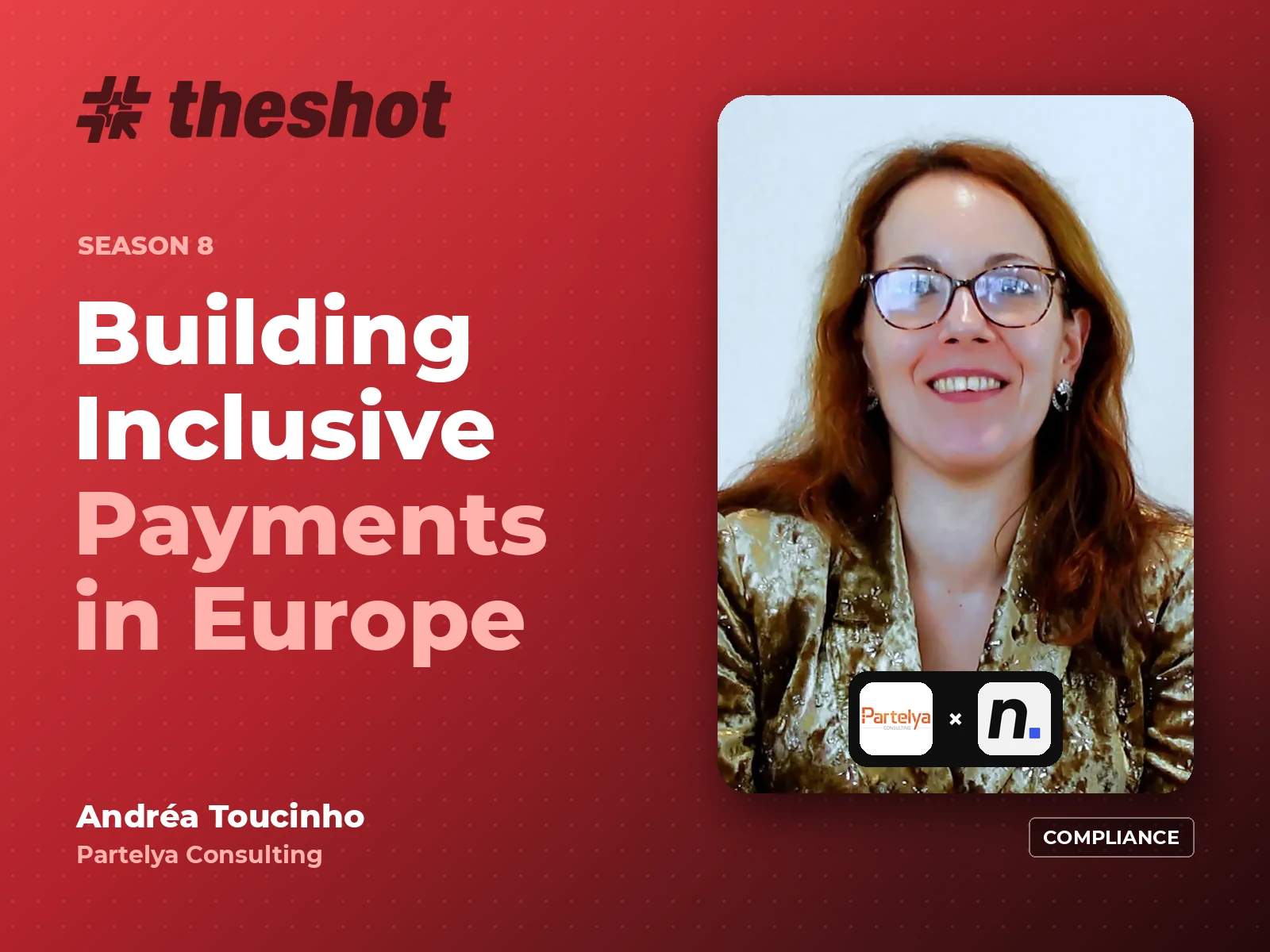
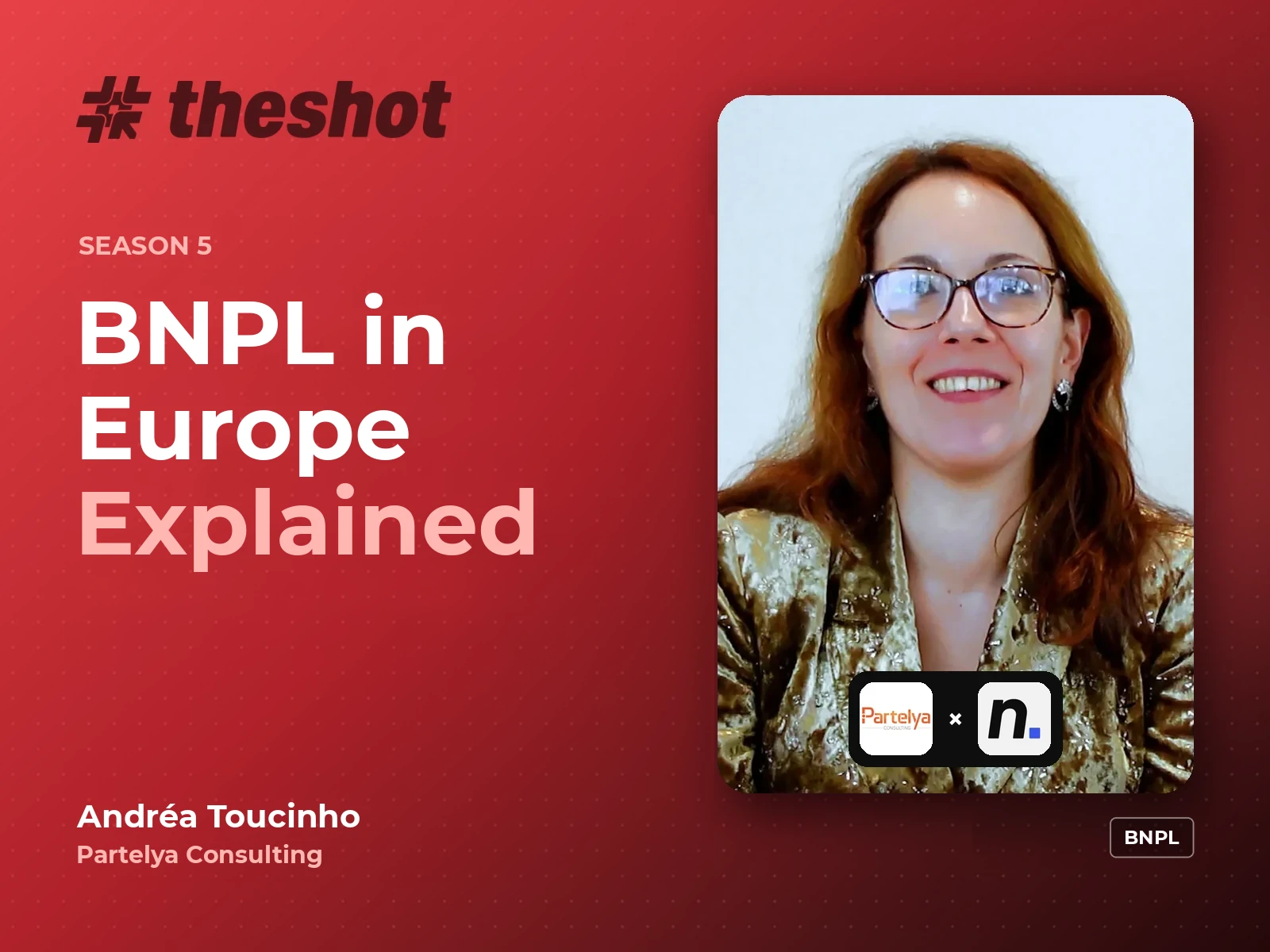
BNPL grew as a checkout button and is now being treated as credit. Andréa Toucinho, Director of Studies, Prospective and Training at Partelya Consulting, has followed that shift closely: Partelya devoted its 2025 annual white paper to BNPL, its innovation, its risks and the responsibilities that come with it. In Season 5 of #TheShot, she traces how BNPL grew, why the market needs a balance between efficiency and protection, and how the topic connects to European payment sovereignty.
This article, updated in October 2026, follows the five episodes of Season 5 and adds the rules and market data that changed in 2026.
Key takeaways on BNPL in Europe:
- BNPL reflects new consumer habits: more digital, more instant, more focused on flexibility.
- Its growth is tied to the e-commerce boom that followed COVID.
- The market needs a balance between efficiency and the protection of end users, especially the most vulnerable.
- BNPL is part of a wider European debate on payment sovereignty, from the digital euro to Wero.
Why is BNPL under regulatory pressure in Europe?
Because it has become a mainstream way to pay, used most by the consumers who can least afford a mistake. Andréa frames BNPL as more than a payment method.
"BNPL is not just a payment method, it's a reflection of new consumer habits. The new generations are more digital, more instant, and more focused on flexibility. BNPL is a way to adapt to that, but it also raises a lot of questions." Andréa Toucinho, Director of Studies, Prospective and Training, Partelya Consulting, in Episode 1
The questions she raises are about protection and inclusion: whether consumers are protected enough, and whether digitally vulnerable people are included or exposed. Recent data supports the concern. The Intrum European Consumer Payment Report 2026, published on 30 September 2026, found that 65% of financially fragile consumers had used BNPL in the past year, against 17% of financially resilient ones, and that 21% of fragile users rely on it because they would not otherwise be able to afford the purchase.
How did COVID accelerate BNPL in Europe?
By moving shopping online at scale. In Episode 2, Andréa links the strong development of e-commerce during and after the pandemic to the trends that carried BNPL: shoppers who discovered online checkouts discovered split payments with them.
The growth has lasted. Klarna, the largest European provider, reported $36.6 billion of gross merchandise volume in the second quarter of 2026, up 18% year over year, with credit provisions at 0.52% of volume. Adoption still varies by country: BNPL accounts for 18% of German e-commerce, according to the Worldpay Global Payments Report 2026.
How can BNPL balance efficiency and consumer protection?
By treating protection as part of the product rather than a cost on it. In Episode 3, Andréa insists that this balance is shared across the whole community, not only consumer associations, but also the providers and financial institutions working on BNPL.
The rules now set where that balance sits. The revised Consumer Credit Directive (EU) 2023/2225 brings most BNPL into the scope of consumer credit, with creditworthiness checks, standard pre-contract information and a right of withdrawal. Its rules apply from 20 November 2026, but transposition is late in many countries: on 1 October 2026, the European Commission sent reasoned opinions to 16 member states, including France, Spain and the Netherlands, for failing to transpose it in full. In the UK, the Financial Conduct Authority has regulated deferred payment credit since 15 July 2026, with rules on affordability, disclosure and support for borrowers in difficulty.
What would a responsible BNPL market in Europe look like?
One where providers go beyond the minimum the law requires. In Episode 4, Andréa suggests that a code of conduct on the use of BNPL in Europe could be useful in the long term, alongside the regulation now in force.
"Since we now have regulation that brings more protection to end users, it is necessary also to work to create a real, responsible BNPL market in Europe." Andréa Toucinho, in Episode 4
For merchants, responsibility shows up in the checkout: no pre-ticked credit options, clear information on what the consumer commits to, and another way to pay when a credit check fails. The operator that provides the checkout decides whether those safeguards are built in for every merchant or left to each one.
How does BNPL connect to European payment sovereignty?
Through the question of who controls the infrastructure European consumers pay with. In Episode 5, Andréa places BNPL inside a wider debate that she calls "a real emergency": the digital euro led by the ECB, and private initiatives such as EPI and EuroPA.
Each moved in 2026. The European Parliament adopted its position on the digital euro on 9 July 2026, and the ECB's Piero Cipollone said on 6 October that the Eurosystem aims to be ready for a first issuance in 2029, after a pilot starting in the second half of 2027. On the private side, EPI's Wero reached 58 million users as it launched in Luxembourg in September 2026, and EPI and the EuroPA partners created the European Network for Payments to make their solutions work across about 130 million users. For a BNPL provider or a PSP, these rails will shape which payment and financing options European shoppers expect at checkout.
What should PSPs, PayFacs and ISVs do about BNPL now?
Treat BNPL as two things at once: a payment method merchants ask for, and a regulated credit product their providers must operate correctly. Before 20 November 2026, that means:
- Check each BNPL provider's status: authorization under the national transposition of the directive, country by country.
- Review the checkout: clear information, no pre-ticked credit, and a fallback payment method when credit is declined, set in the hosted checkout.
- Keep the payment mix broad: BNPL next to cards, wallets and account-to-account payments, through one payment network.
On NORBr's white-label payment infrastructure, operators connect BNPL providers alongside other payment methods and set which methods each merchant offers, in which order, per market. NORBr does not grant credit or run creditworthiness checks: the BNPL provider remains the lender and carries those obligations. The article on payment inclusion, from Andréa's second season, and the checkout best practices guide cover the rest of the checkout.
Who is Andréa Toucinho?

Andréa Toucinho, Director of Studies, Prospective and Training, Partelya Consulting. Andréa is a consultant, speaker, journalist and author specializing in banking, payments, fintech and the European payments landscape. At Partelya Consulting, a payments consultancy, she leads studies, foresight and training, including Partelya's annual white paper, devoted to BNPL in 2025. She came back to #TheShot for Season 8 on inclusion and accessibility. Follow her on LinkedIn and Partelya Consulting on LinkedIn.
BNPL was sold as a way to pay later. From 20 November 2026, in most of Europe, it is also a loan someone has to be able to repay.
NORBr is the white-label payment infrastructure for PayFacs, PSPs, ISOs and ISVs. Operators connect BNPL next to cards, wallets and local methods, and set the payment mix each merchant offers.
About #TheShot: a video series sharing clear, unsponsored insights from payment professionals. One expert, one topic, short episodes. Watch Season 5 with Andréa Toucinho or browse all seasons.