Your routing logic.

Their rules.

You set the boundaries. Each merchant operates  their own logic.

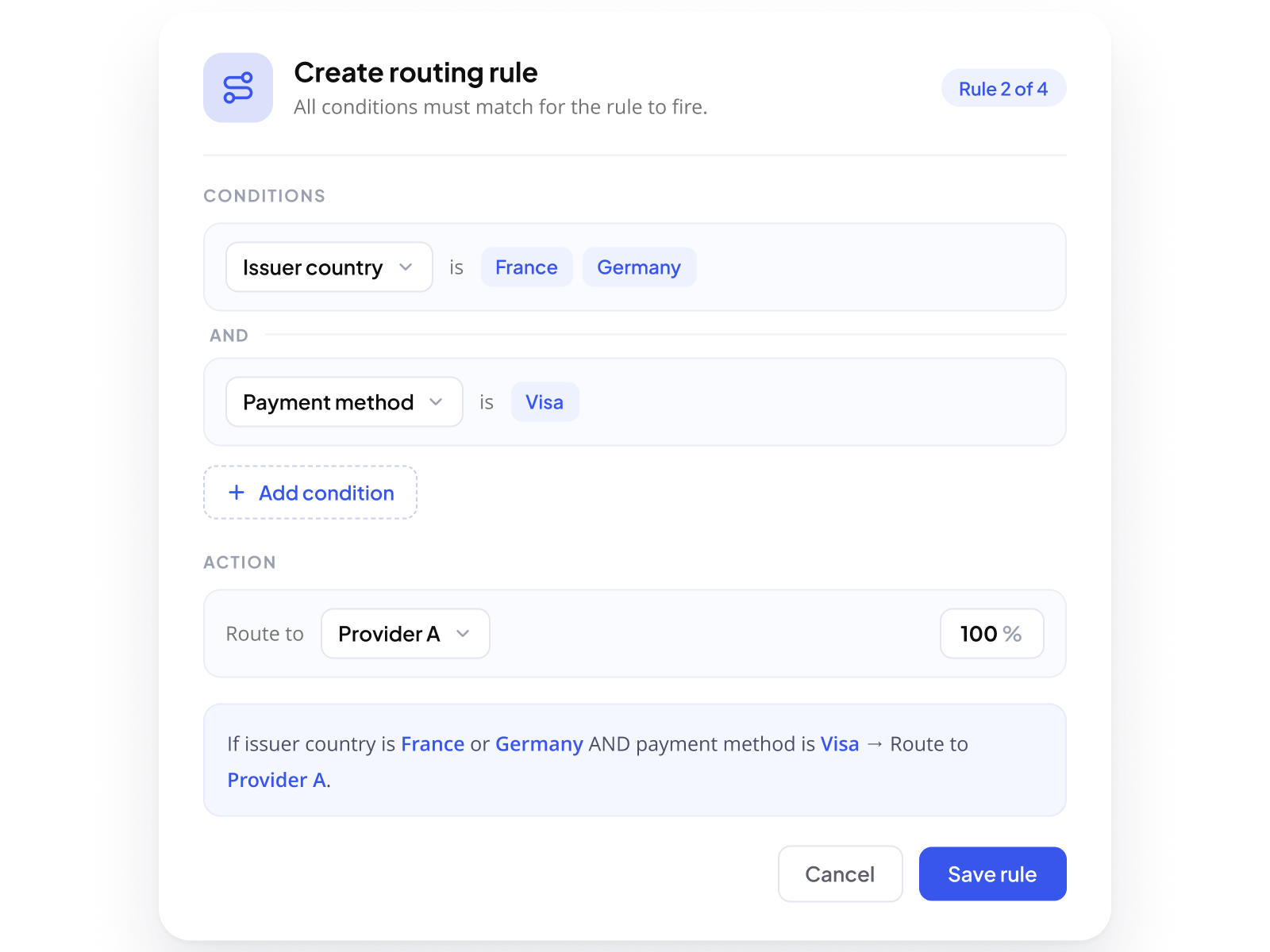
A default provider handles every transaction the same way. Your merchants can do better than that. Each merchant on your platform gets their own Routing Matrix:  an ordered set of rules that evaluate every transaction before it reaches a provider, based on the conditions that match their business. Country, payment method, amount, MCC, each merchant builds what they need, directly in the Console, without involving your team.

Book a demo
Hero image
Authorize more. Wherever your customers pay.
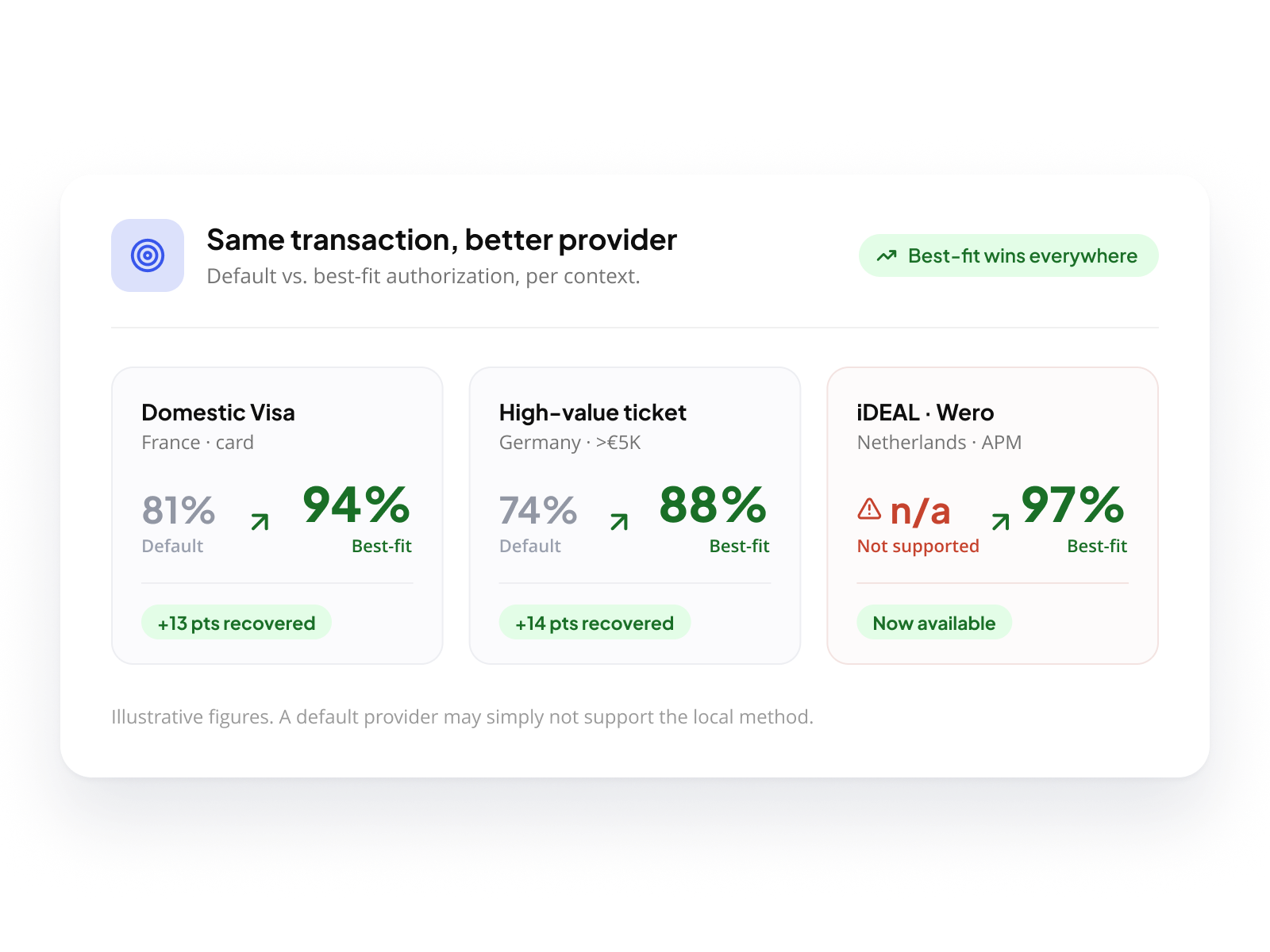
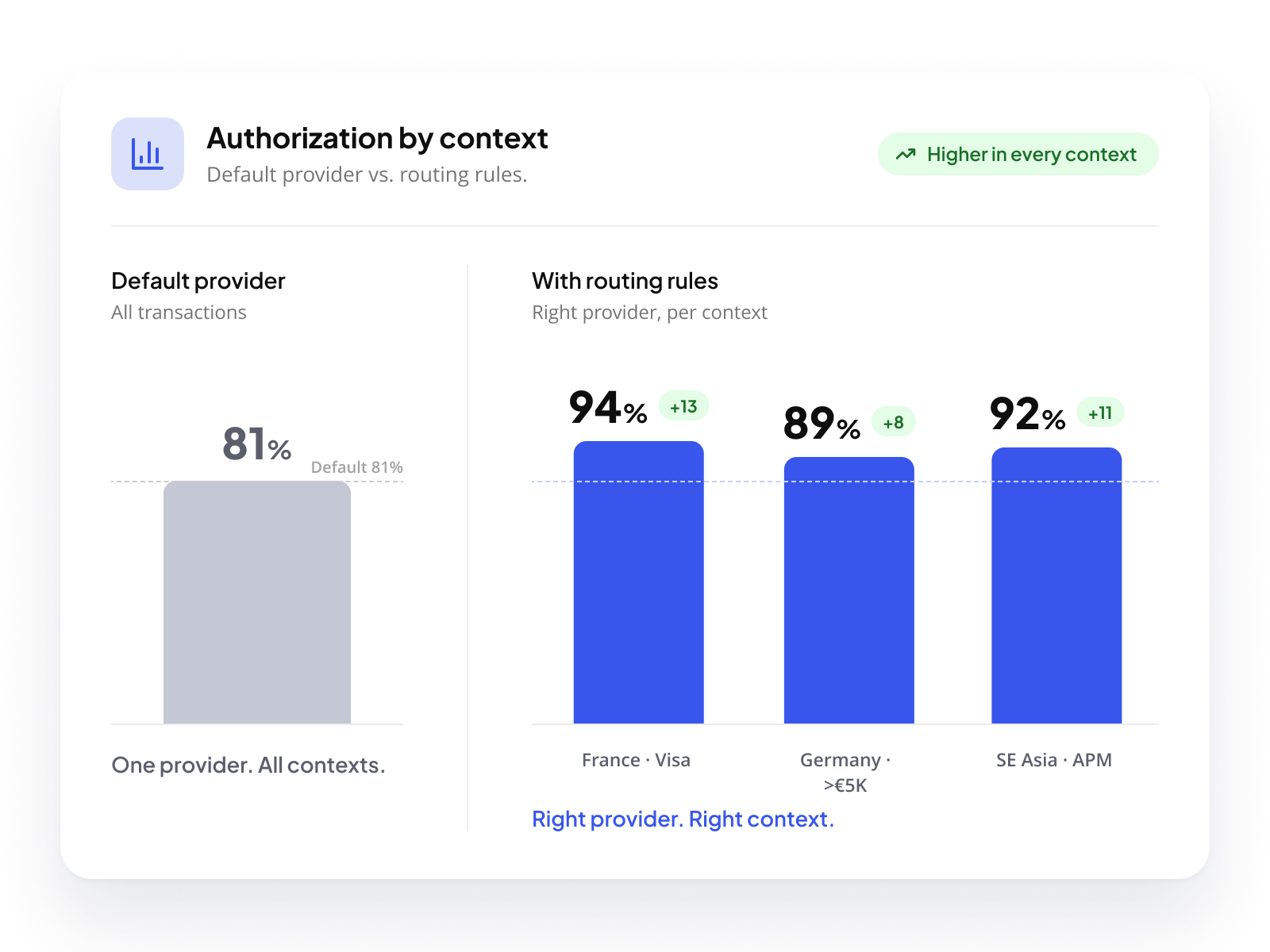
Authorization rates are not uniform across providers. The acquirer that performs on domestic Visa transactions in France may not be the right choice for high-value tickets in Germany, or for alternative payment methods in Southeast Asia. Your merchants know their business. With NORBr's Routing Matrix, they can translate that knowledge into rules: route each transaction to the provider most likely to authorize it, based on the conditions that actually determine the outcome.
Route by what determines authorization
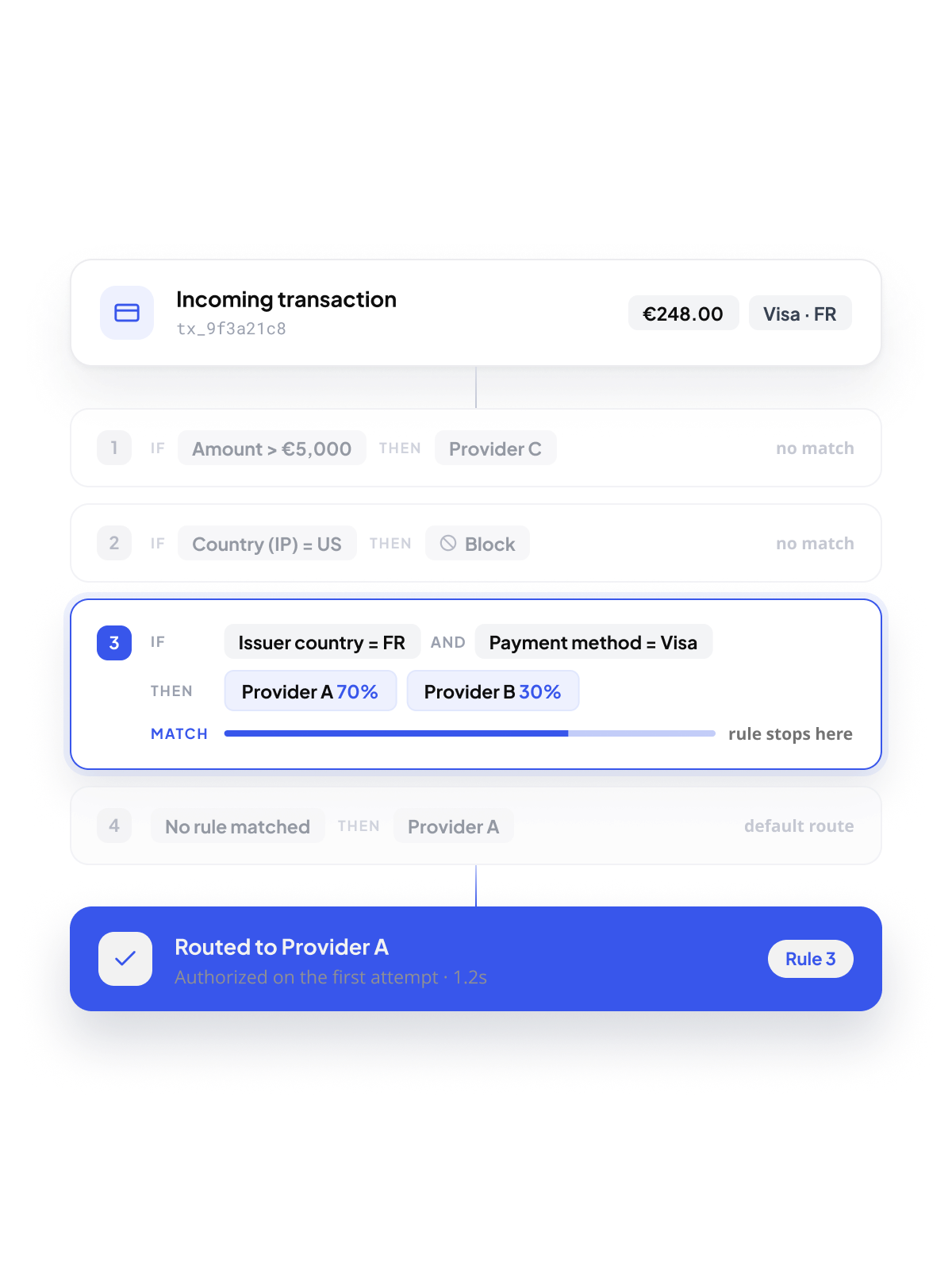
Issuer country, payment method, transaction amount, MCC, BIN, channel, your merchants build rules from the variables that explain their declines. A rule can combine multiple conditions. All of them must match for the rule to fire. The result: transactions stop going to the wrong provider by default.
A default for everything else
Not every transaction matches a rule. When none fires, a named default route applies, a provider the merchant chose explicitly, not a system fallback. No transaction falls through without a defined path.
Your merchants adapt. Without your team.
Routing logic changes. A provider raises fees. A new acquirer shows better authorization rates on a specific market. A processing threshold is approaching. Your merchants need to react, and they should not need to open a support ticket to do it. On NORBr, every routing rule is built and modified directly in the Console. No code. Changes take effect immediately.
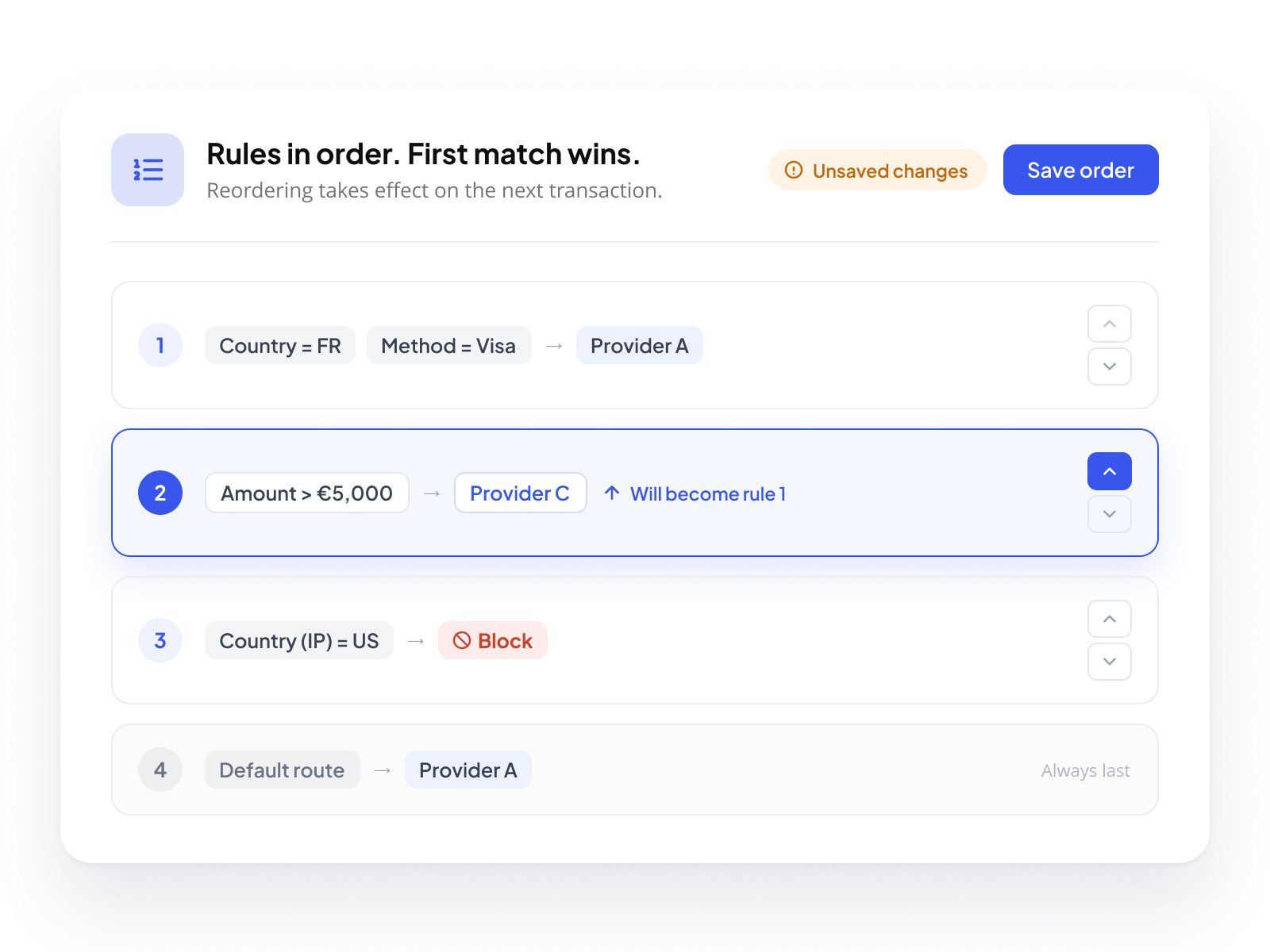
Rules in order. First match wins.
Rules execute top to bottom. Reordering is a drag. Changes take effect immediately, on the next transaction. No deployment. No engineering ticket.
Split traffic. Manage thresholds.
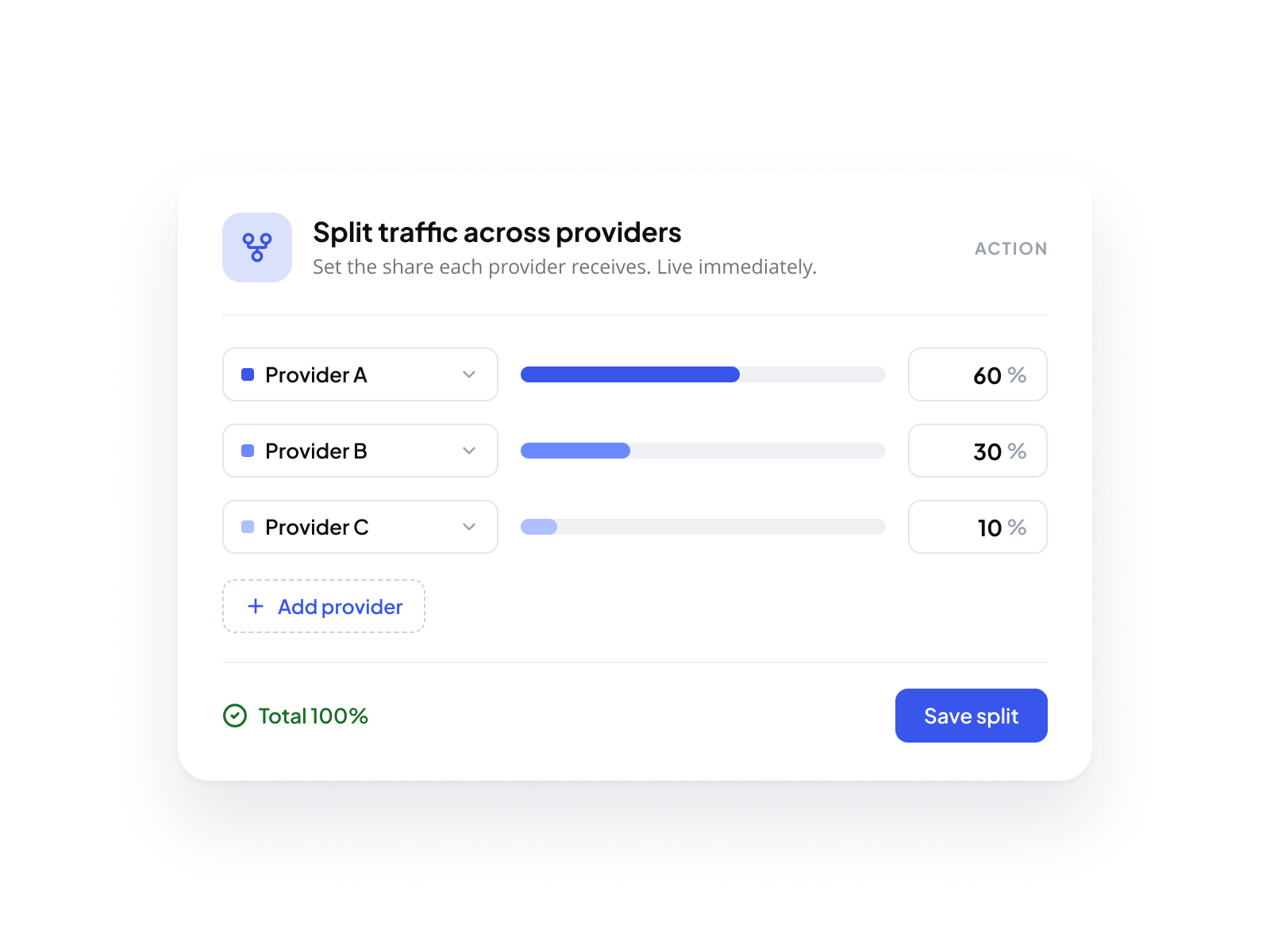
One rule can route to multiple providers simultaneously, in percentages the merchant sets. Use it to stay within a processor's volume limits, balance load across acquirers, or reduce dependency on a single provider. The split is live immediately. Adjustable at any time.

Evaluate a new provider. On live traffic.

Switching acquirers is a calculated risk. Your merchants do not have to take it blind. The A/B split condition sends a defined share of live traffic to a new provider while keeping the main route intact. The data comes back. The decision is made on evidence.

A defined split. Adjustable at any time.
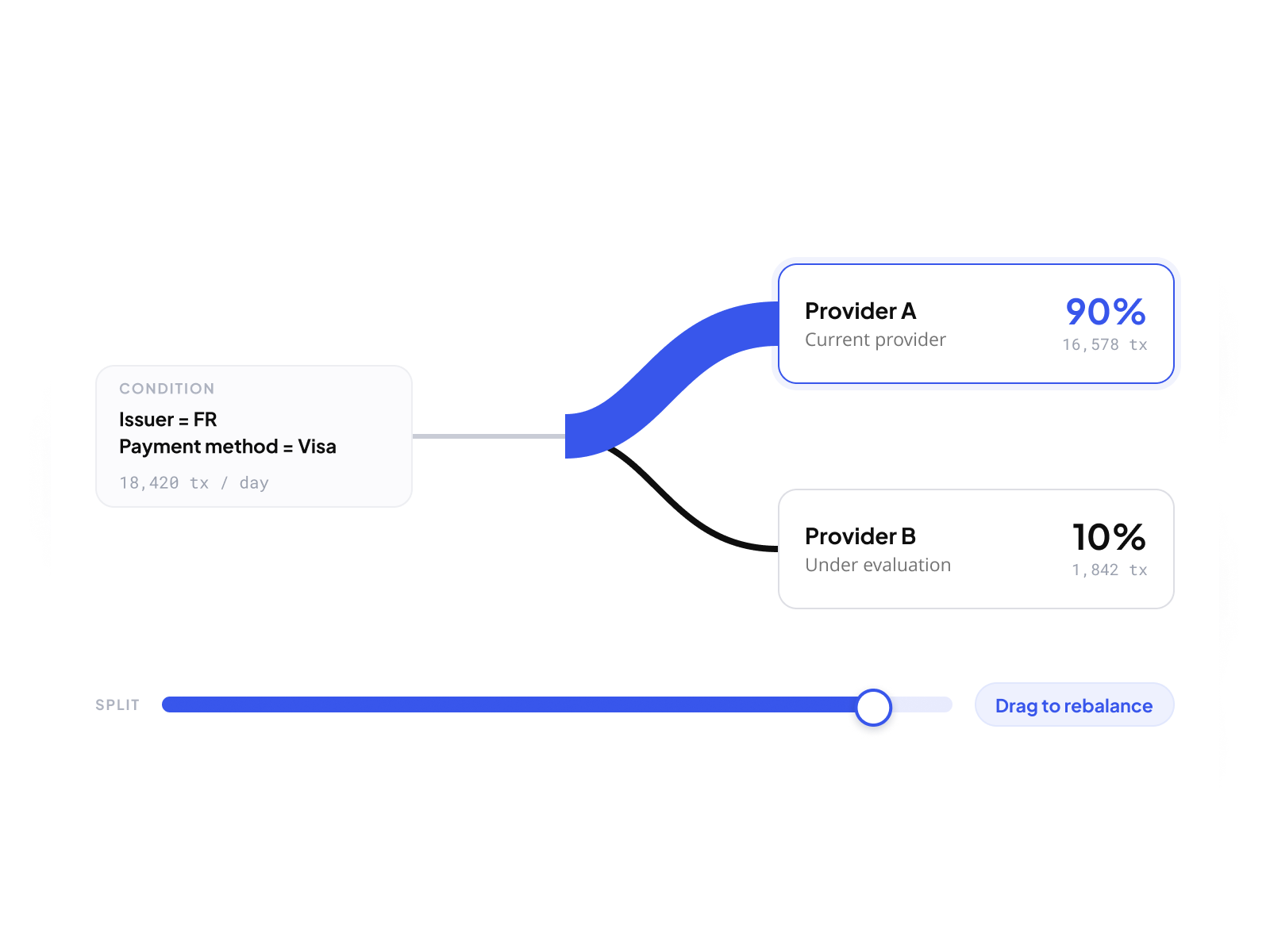
Set the condition, assign the percentages, 90% to the current provider, 10% to the one under evaluation. Both routes are live. The test runs on real transactions. Adjust the split without stopping it.
One decision. Based on results.
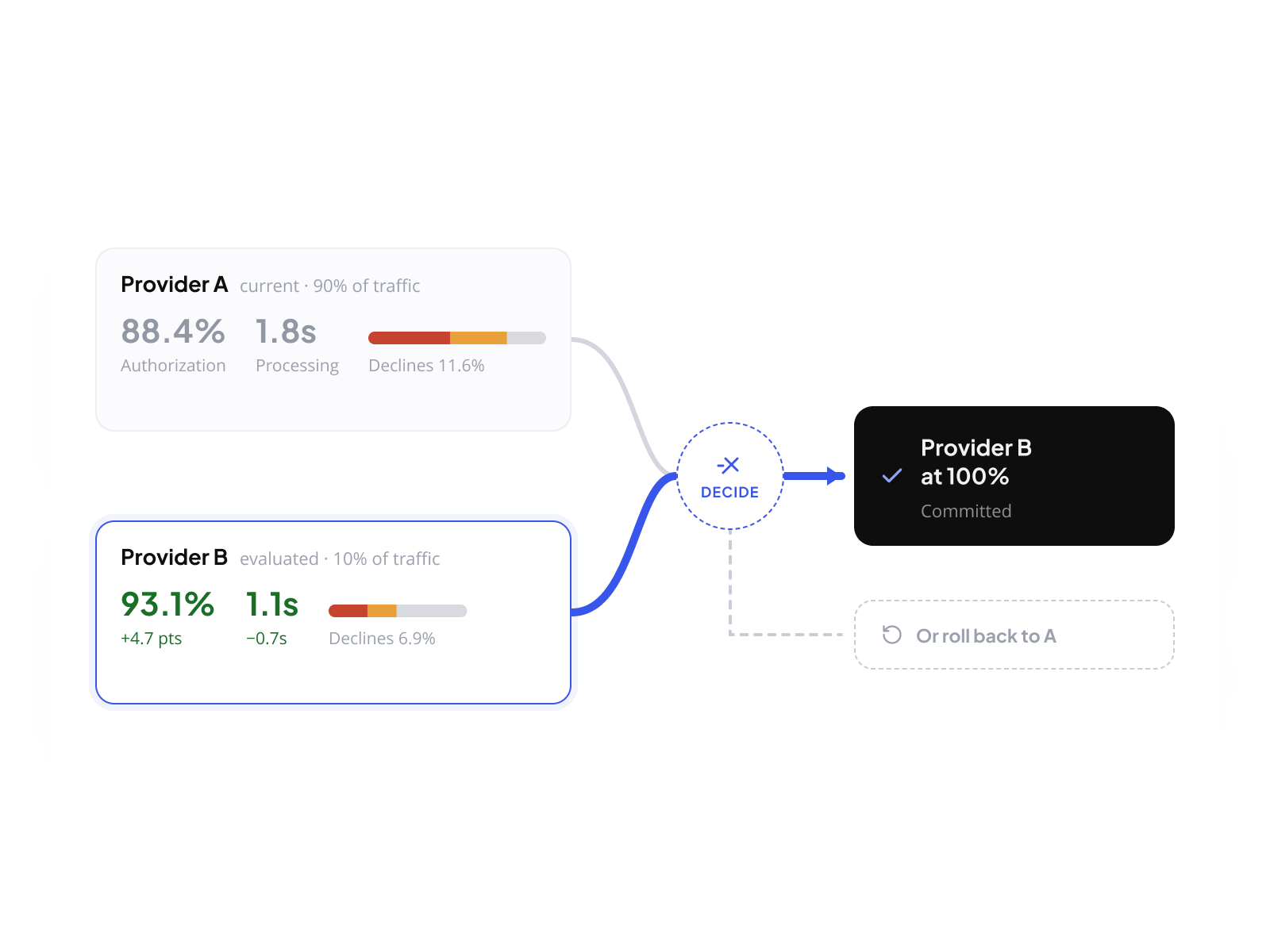
Authorization rate, processing time, decline distribution, both providers, side by side. When the data is clear, commit to the better performer at 100%. Or roll back. No engineering involved either way.

The best route isn't the default one.

Your merchants define the logic. You give them the tool.  
NORBr runs it on every transaction.

Book a demo