One stack.

Online and in-store.

Online or in store, every sale runs on the same model.

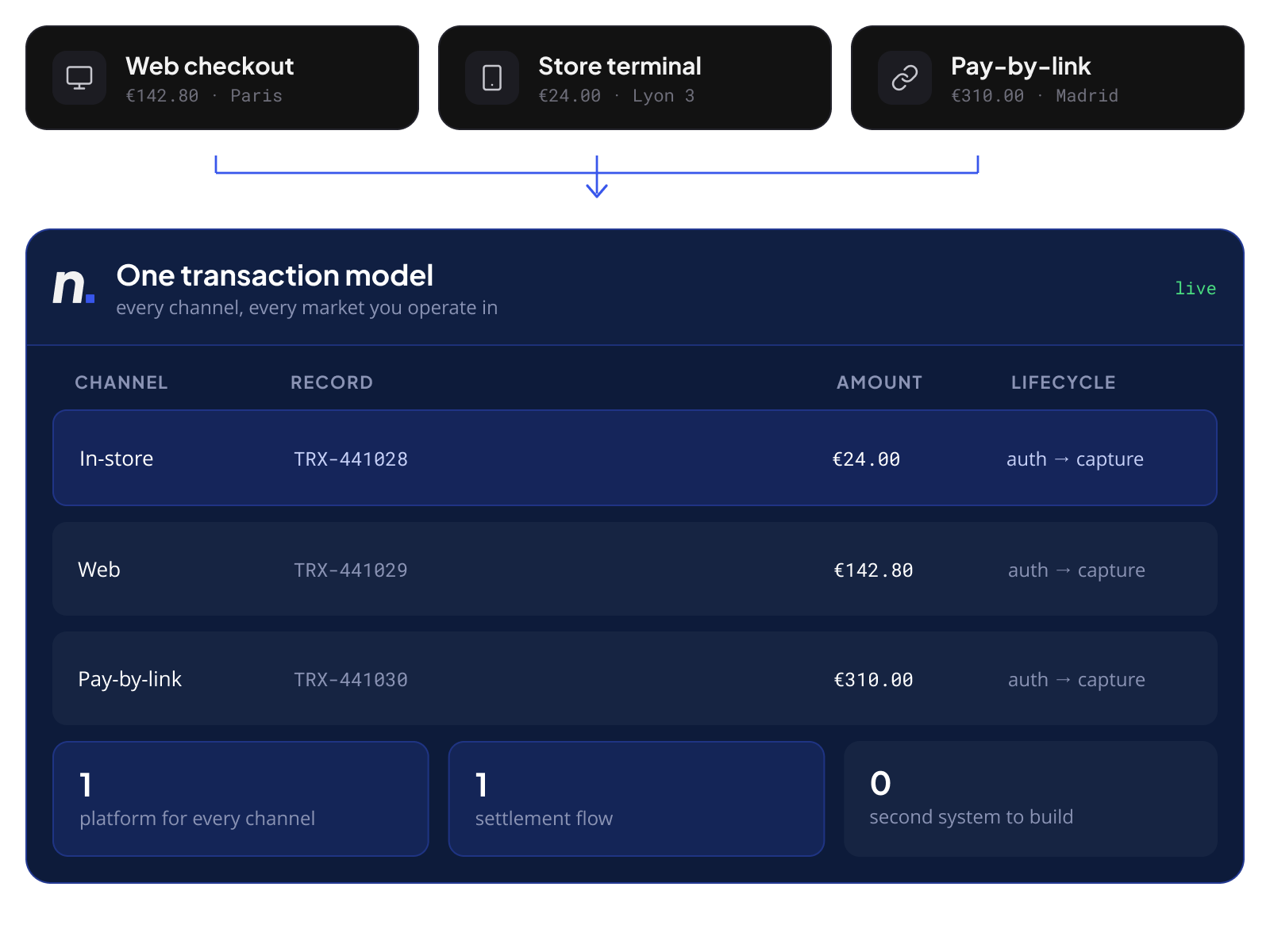
Online or in store, every sale runs on the same model. Your channels run on one system. A payment made at a store terminal and one made on the web follow the same lifecycle and settle the same way. Across every market you operate in, one platform runs the whole flow, with each market's local methods live on both channels.

Book a demo
Hero image
Run every channel on one transaction model.
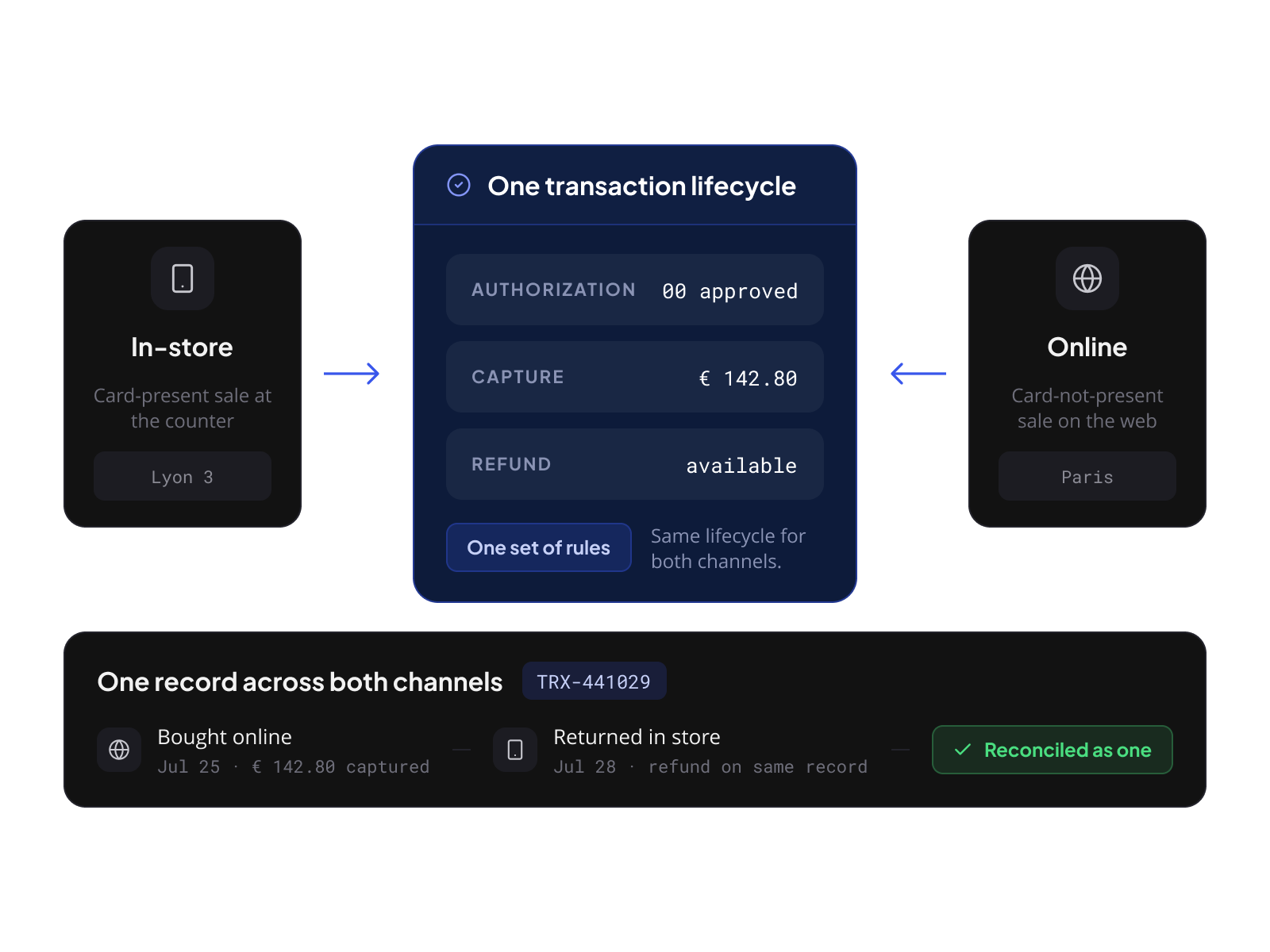
Online and in-store usually run on different systems, with their own rules for authorization, capture and refunds. On NORBr they share one transaction model, so a sale behaves the same way at the terminal and on the page. A shopper can buy online and return in store against the same record, and your teams work one set of flows instead of two. What you operate is one payment system that happens to reach two channels.
Offer local methods on both channels.
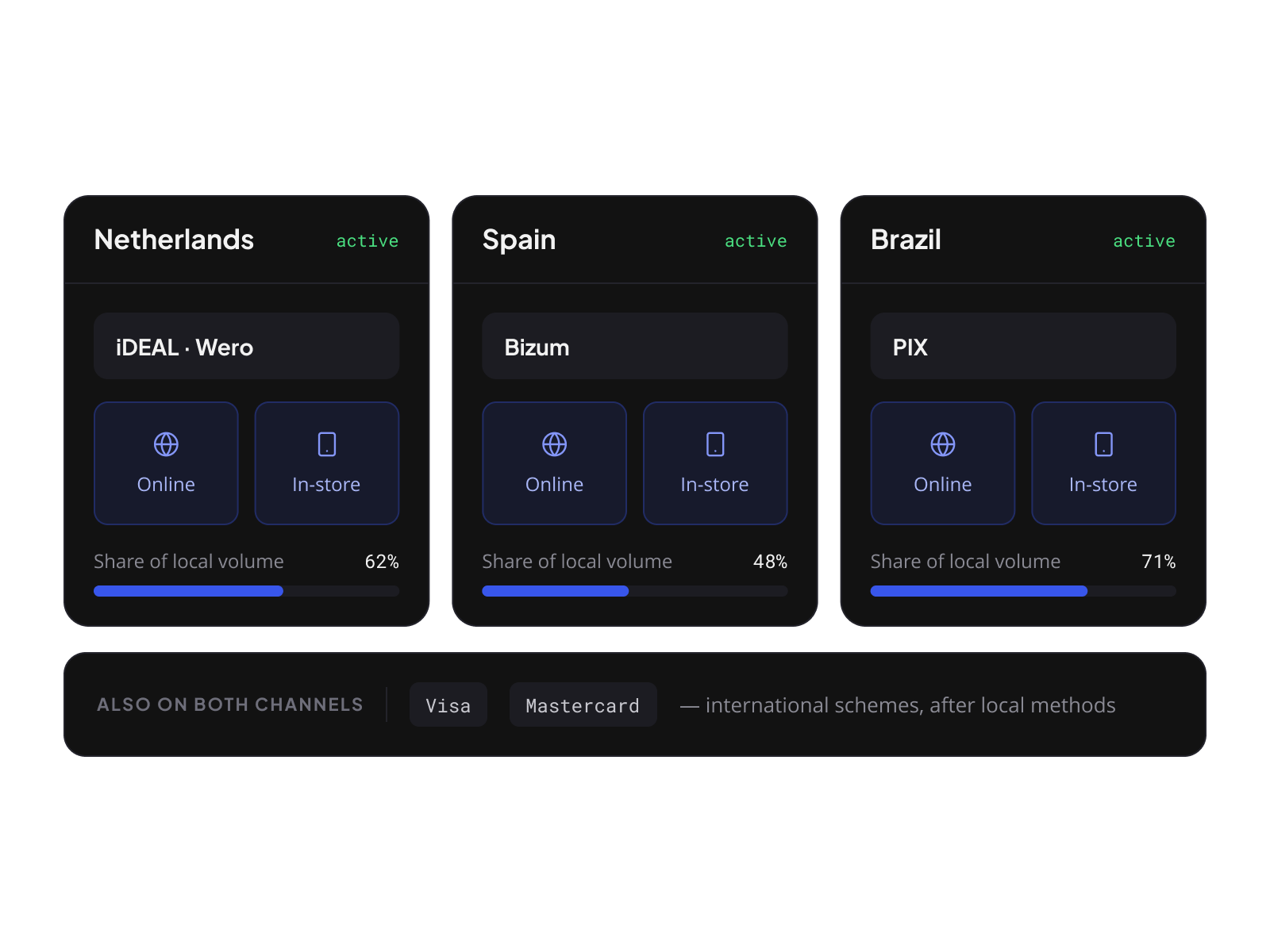
Shoppers expect their usual methods wherever they pay, and that expectation reaches the store as much as the web. When you enter a market, its local methods come online across both channels, alongside the international schemes. A method like iDEAL | Wero works on the site and at the terminal, from the same activation. Each market's mix stays current, so your stores and your online front carry the same local relevance.
Read in-store like you read online.
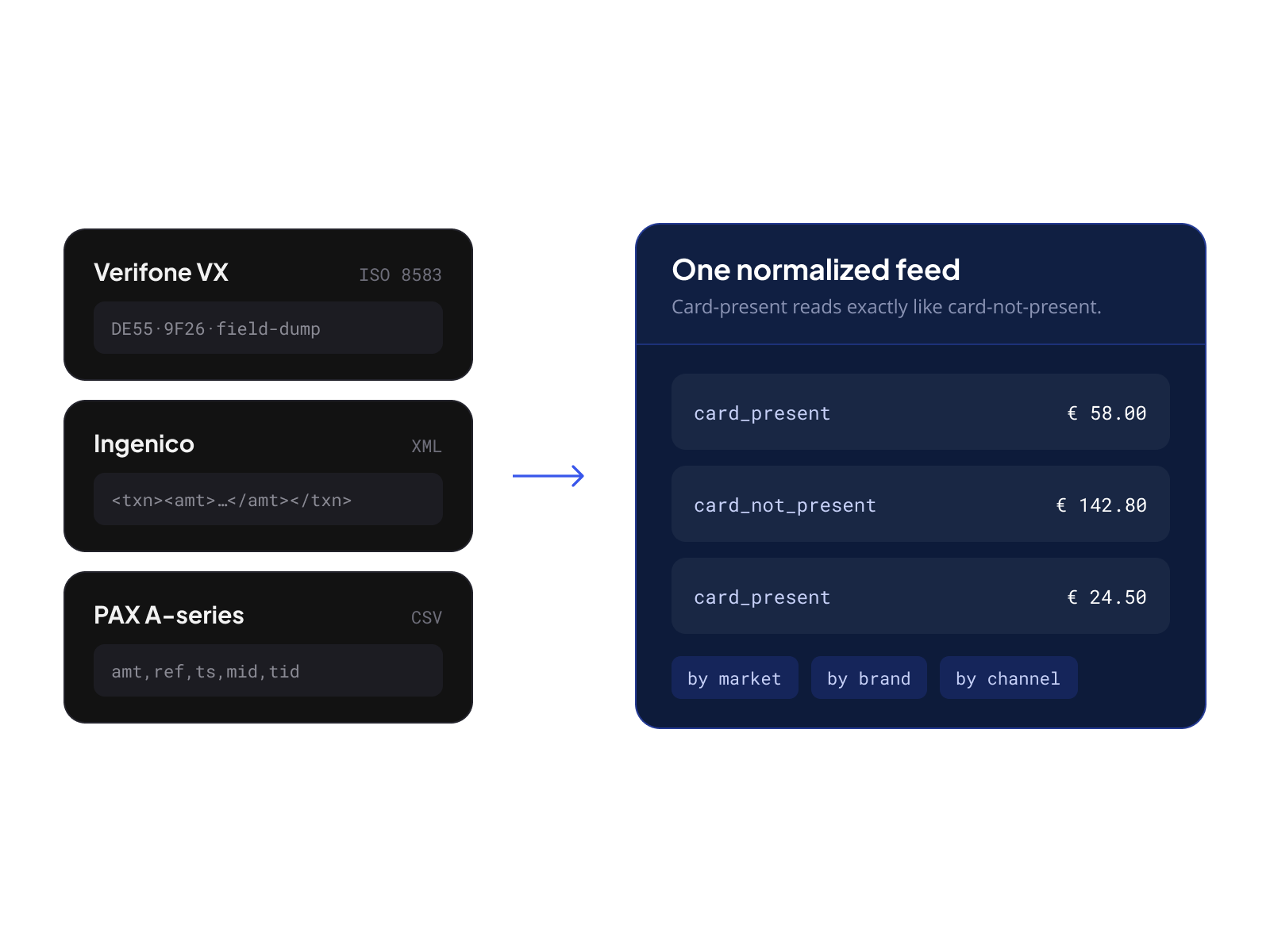
On NORBr that data is normalized into the same model as your online payments, so a card-present sale reads like a card-not-present one. Your reporting, reconciliation and routing see one clean stream across both channels. You analyze the business by market, by brand or by channel, on data that already lines up.
→ Turning that one clean stream into a single view across providers is the subject of Consolidated reporting & reconciliation.µ
→ Reading performance and true cost across it is what Payment Intelligence makes possible.

Run every store and site on one stack.

Online and in-store on one model, local methods in every market.

Book a demo