The checkout your

merchants own

On your platform, each merchant owns their checkout experience.

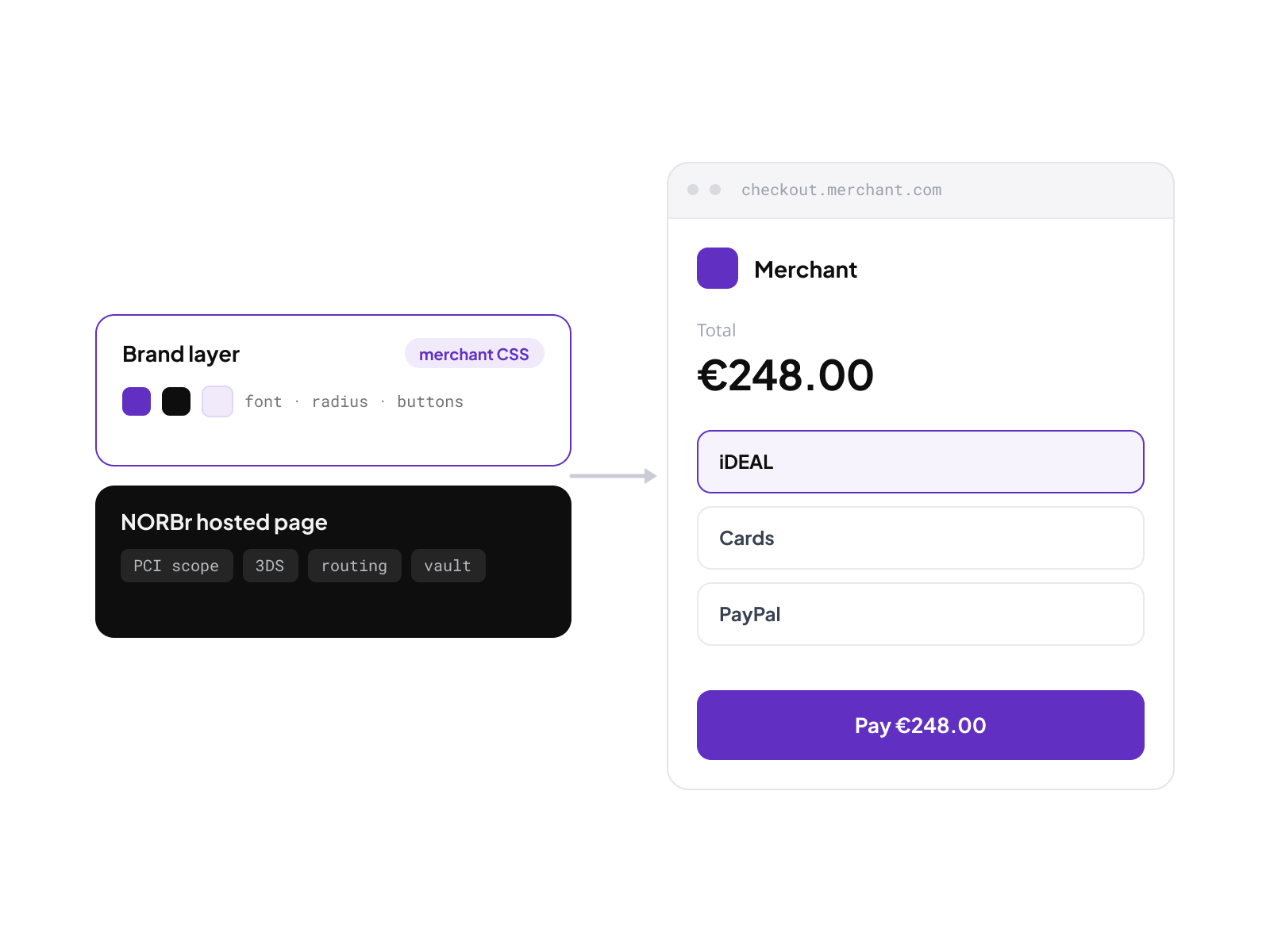
The checkout your merchants deliver is the last moment before a transaction. What it looks like, which methods it shows, what happens after, all of it shapes conversion. Each merchant on your platform gets full control over their checkout: a hosted page under your brand's CSS, configurable payment method display, custom redirect URLs, and a Pay-by-Link for payment scenarios that don't start from a cart. You set the framework. Your merchants configure the experience.

Book a demo
Hero image
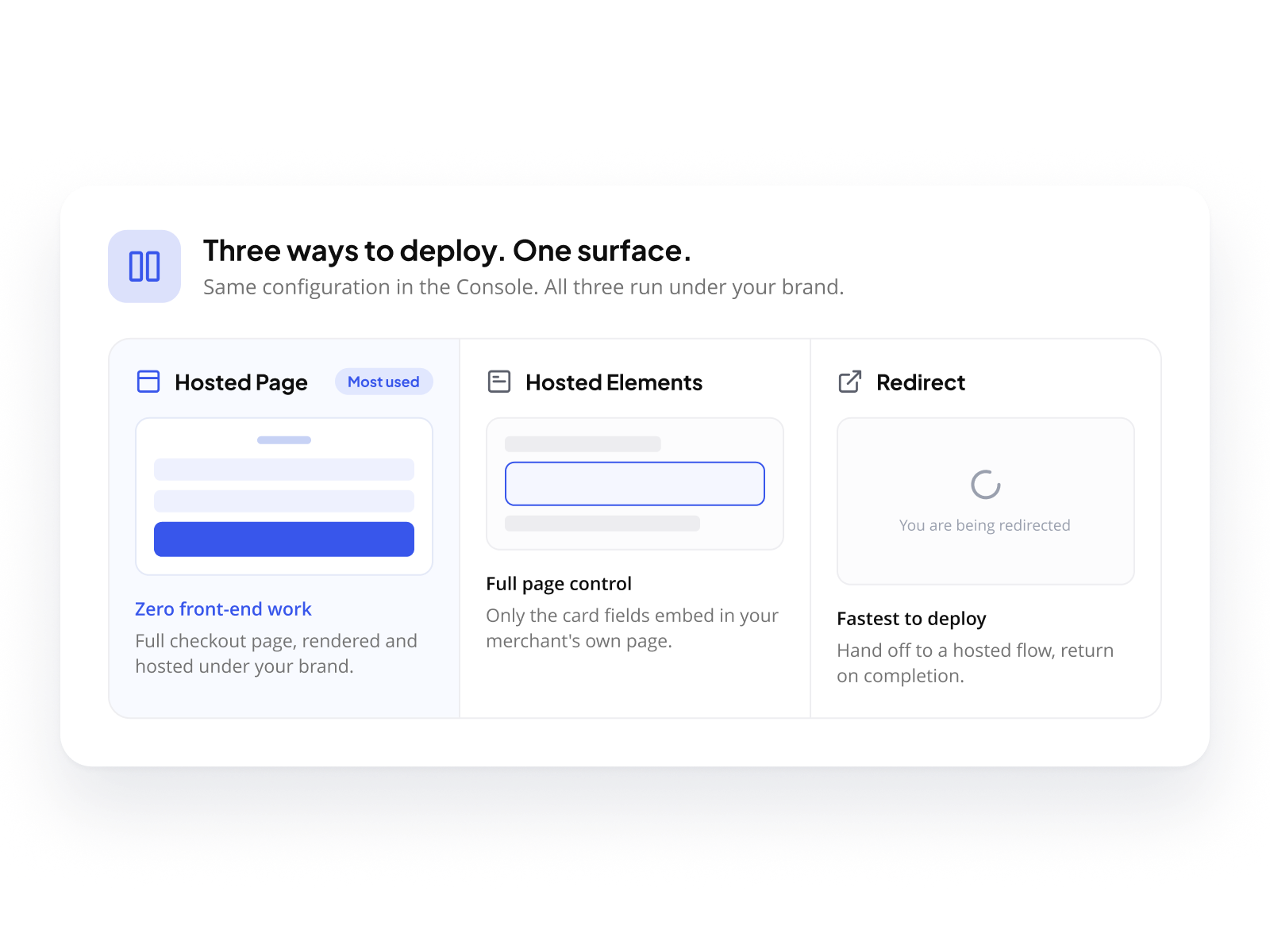
Three ways to deploy. One surface.
Your merchants choose the integration that fits their technical context. All three share the same configuration surface in the Console. All three run under your brand.
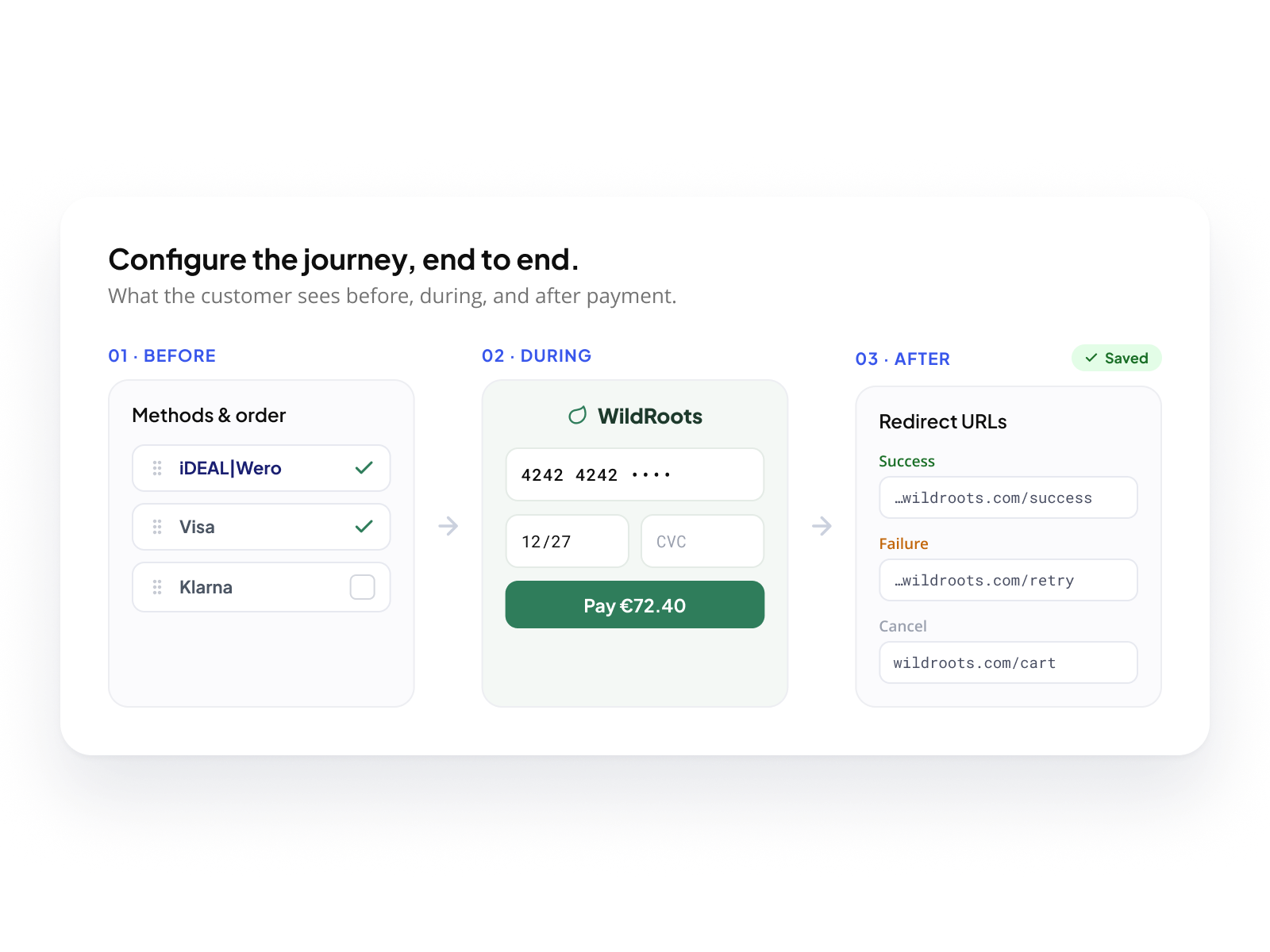
Configure the journey, end to end.
Before: what your merchants' customers see
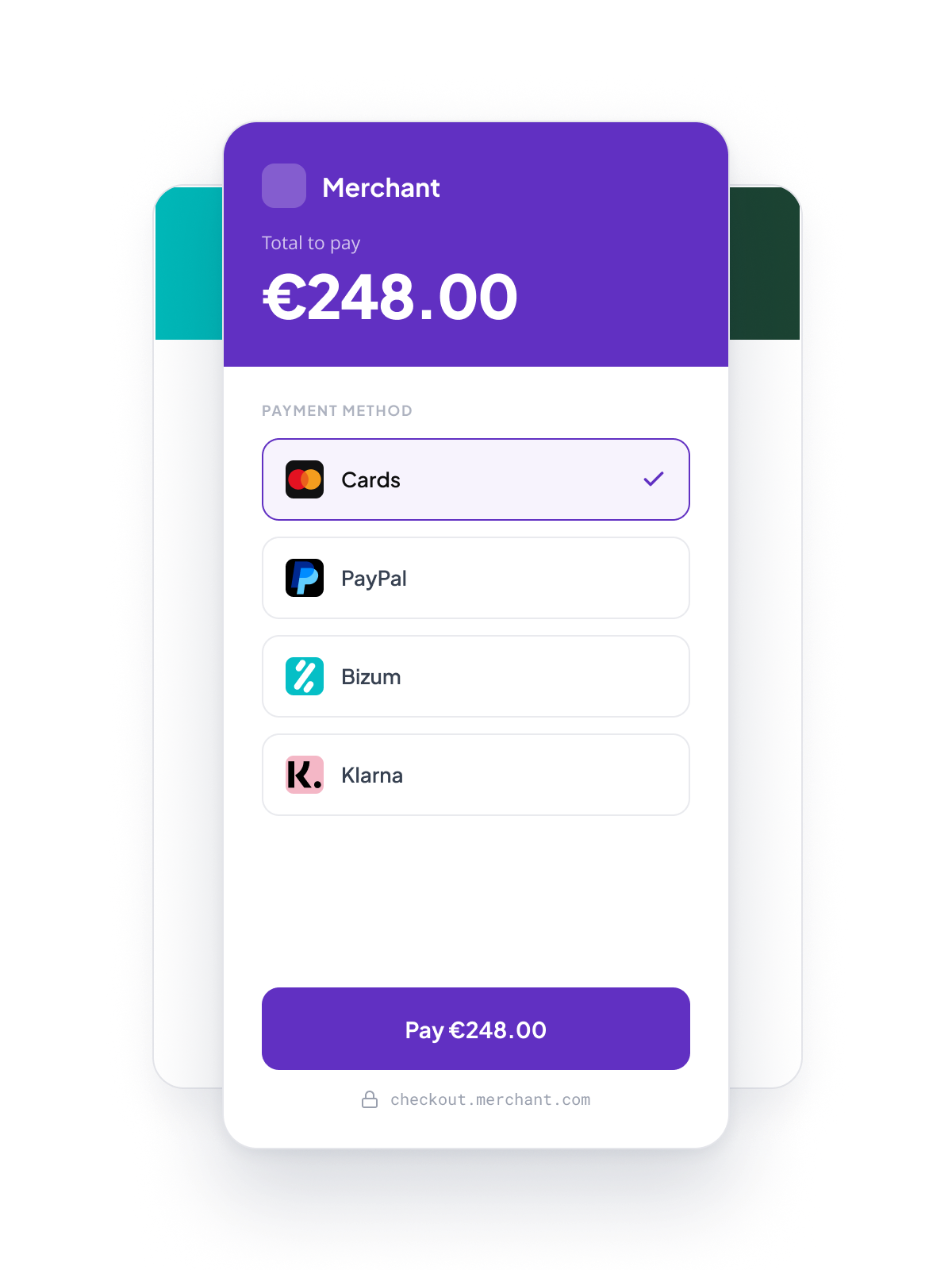
Which payment methods appear, and in what order, is a configuration decision. Your merchants choose from the methods active on their contract. They set the display order. iDEAL|Wero at the top for a Dutch merchant. Bizum first for Spain. Bancontact before anything else for Belgium. The checkout reflects where the merchant's customers actually pay.Both options are available per return code.
During: a page that carries their brand
The hosted page runs NORBr's infrastructure behind a CSS layer your merchants control. Colors, fonts, button styles, the checkout looks like their brand, not a third-party page. Customers stay in a consistent brand environment from cart to confirmation.
After: redirects that close the loop
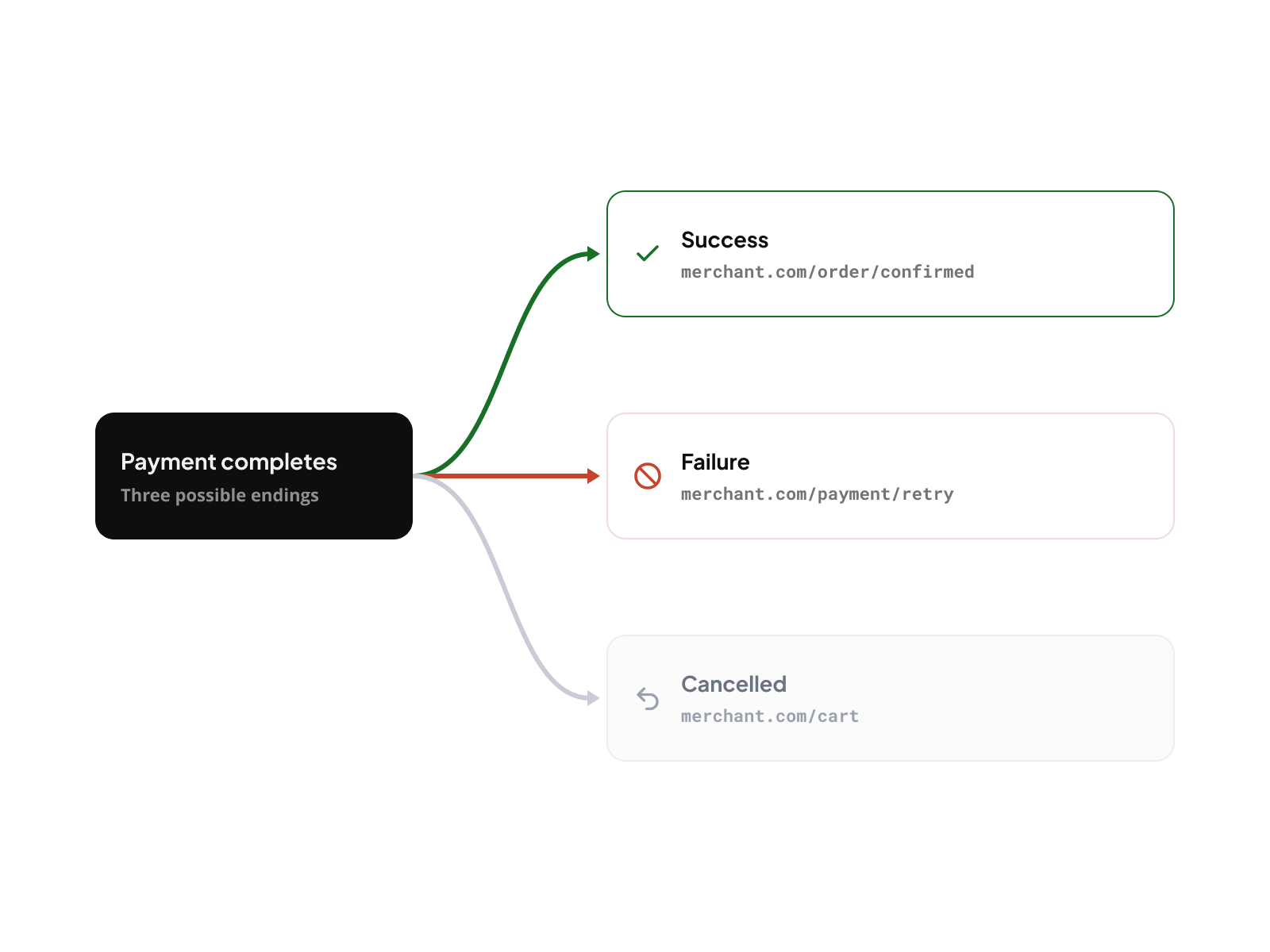
When a payment completes, successfully, with a failure, or after a cancellation, the customer lands on a URL the merchant defined. Not a generic confirmation screen. Their page. Their message. Their next step.

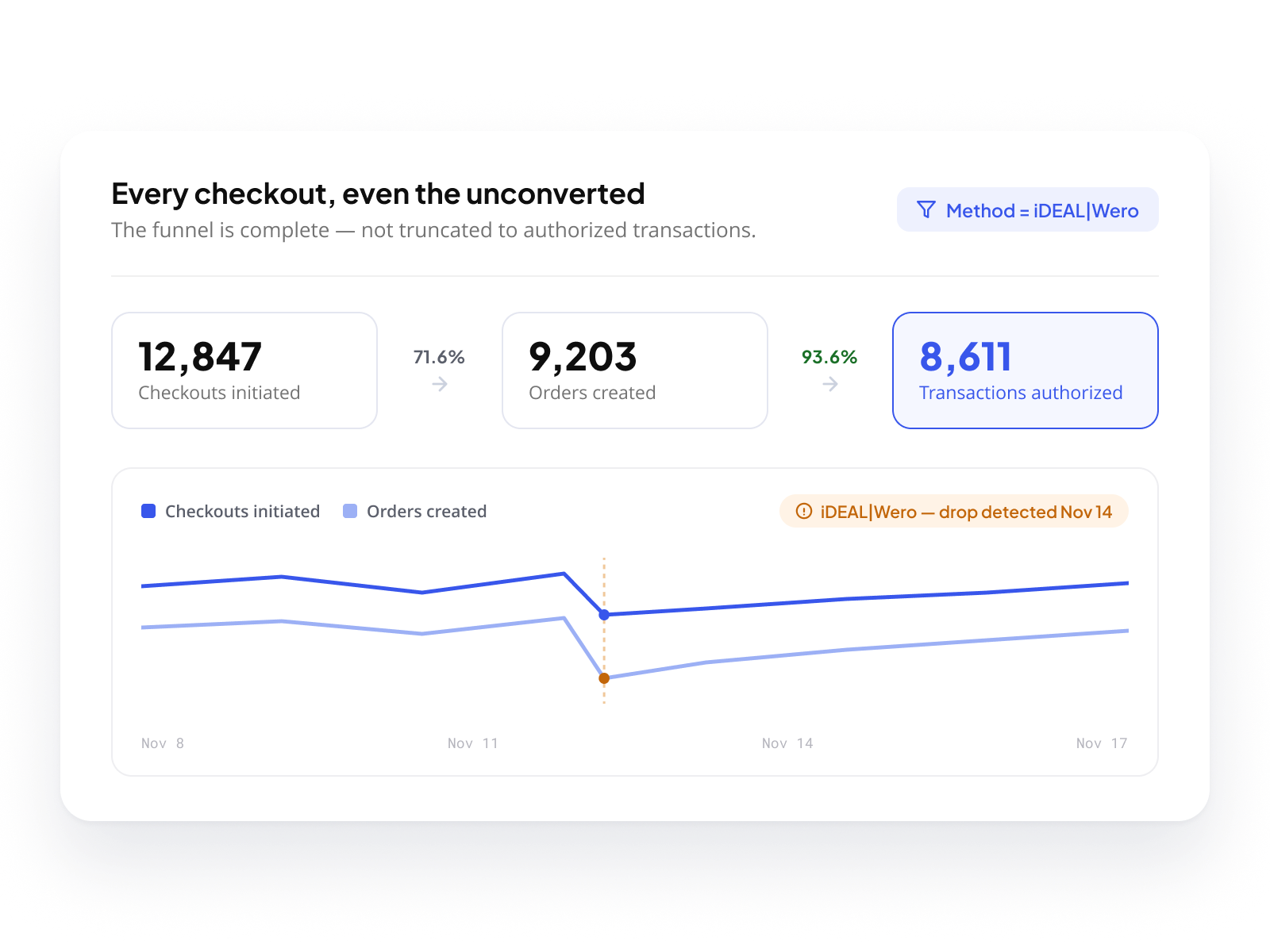
Every chekout, even the unconverted

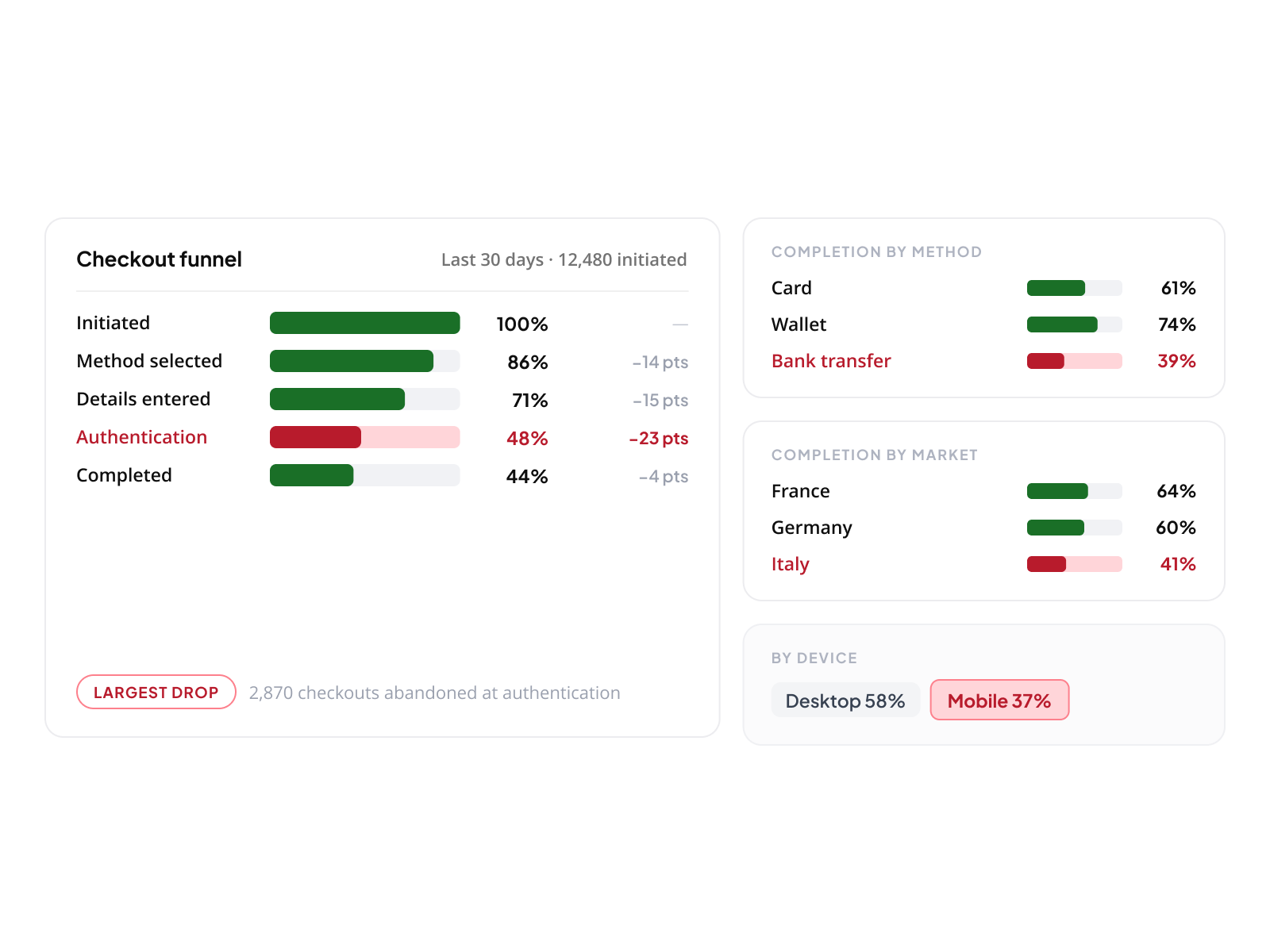
Most platforms only track transactions. NORBr tracks every checkout, initiated, abandoned, or failed, so your merchants see the full picture.

See where the funnel breaks
Every checkout your merchants initiate is recorded: the method displayed, the device, the moment of abandonment. When conversion drops, your merchants don't guess where. They see exactly which step, which method, which market. The gap between "initiated" and "completed" becomes a data point, not a mystery.
Catch problems before they become complaints
A spike in unconverted checkouts on a specific method or market is often the first signal of a misconfiguration, a provider issue, or an SCA conflict. Your merchants see it in their analytics before it becomes a volume of support tickets. They act on data, not on customer reports.
Pay-by-Link. A checkout without a cart.
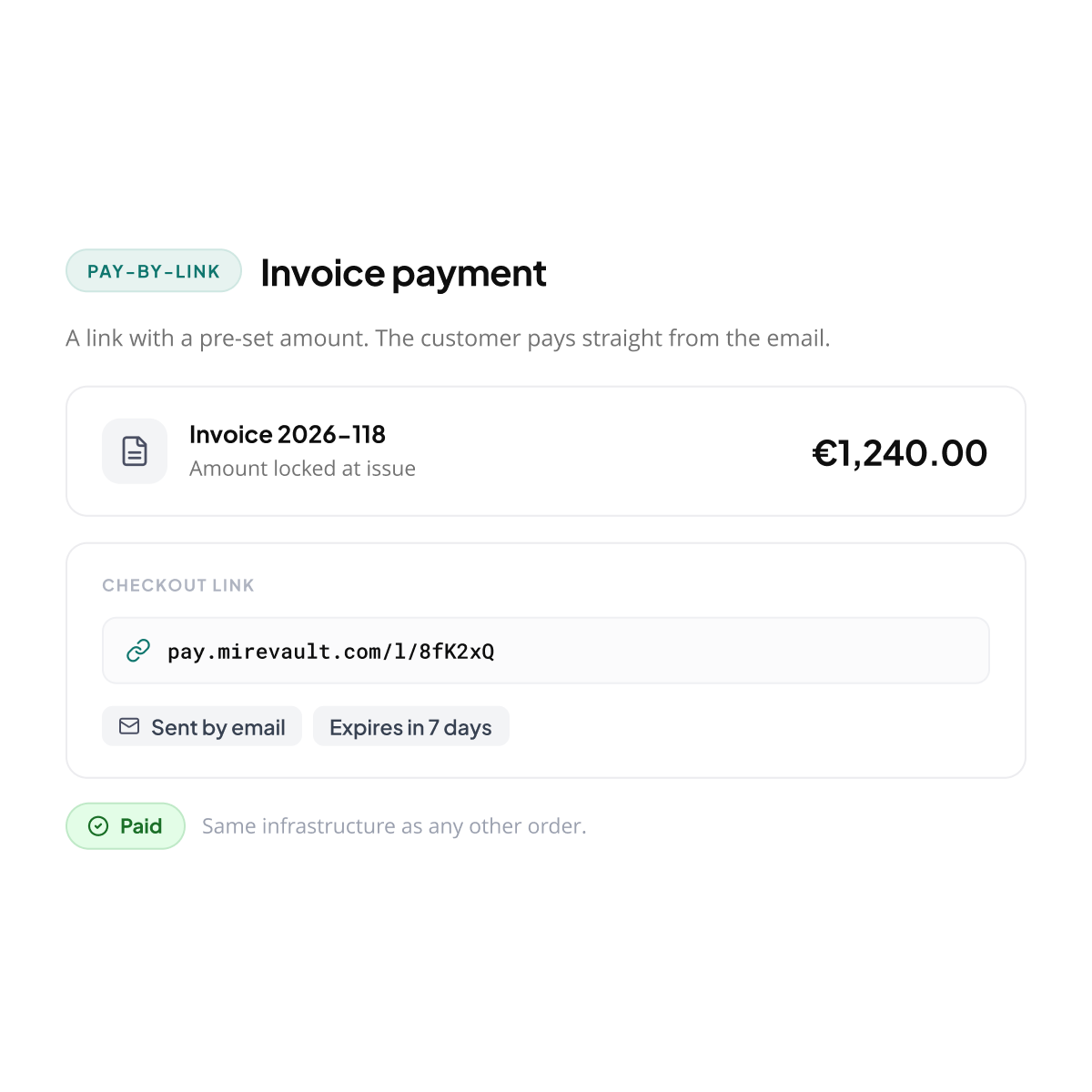
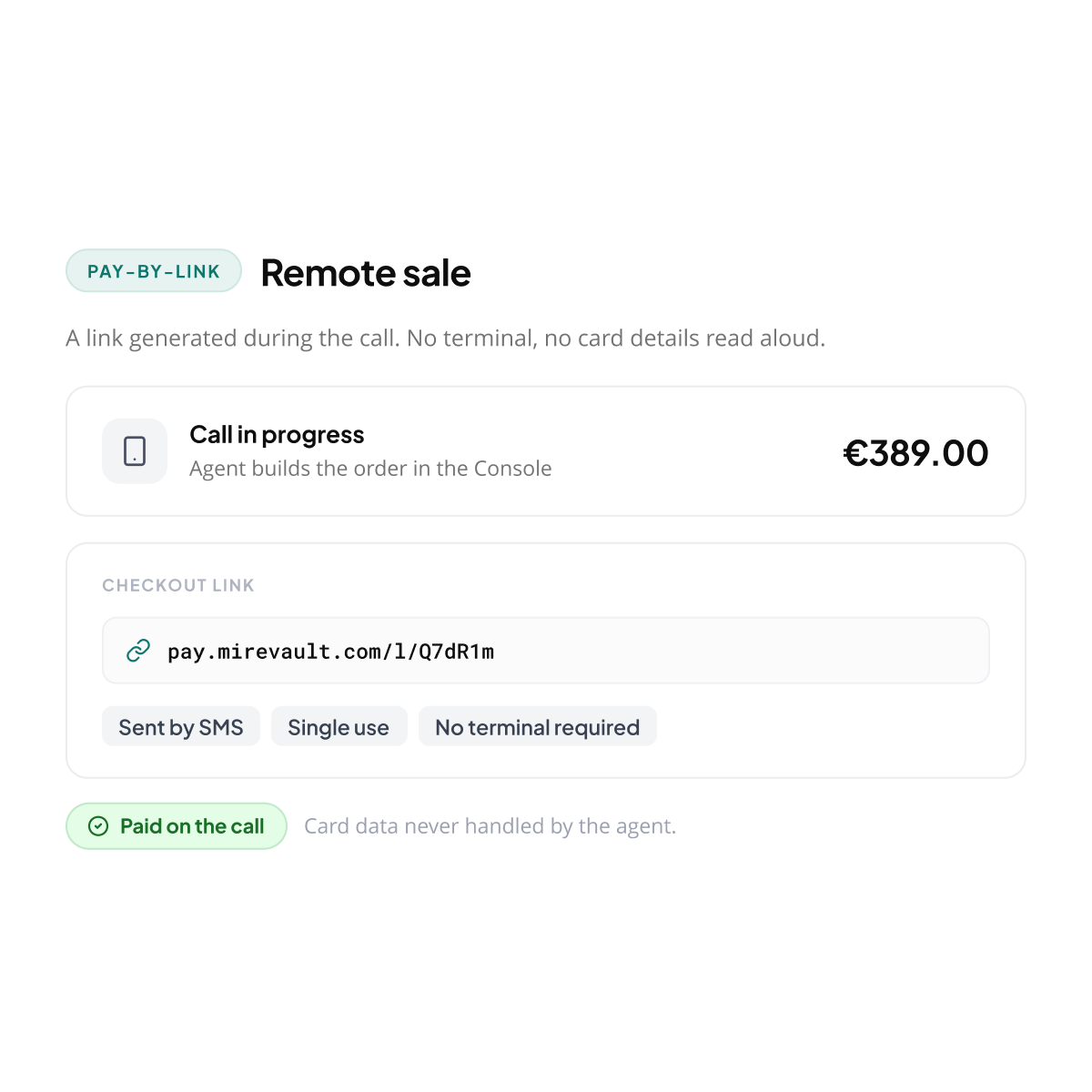
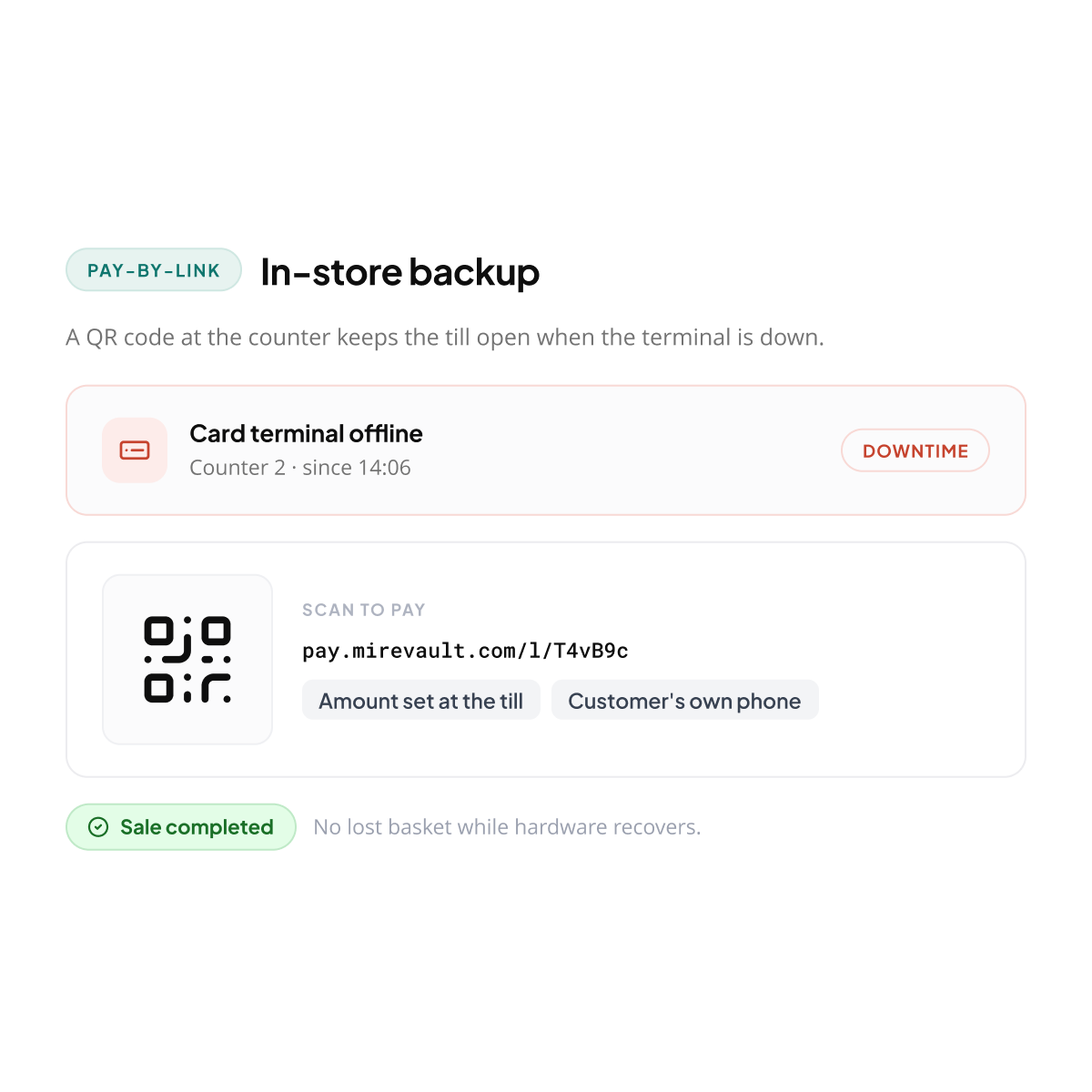
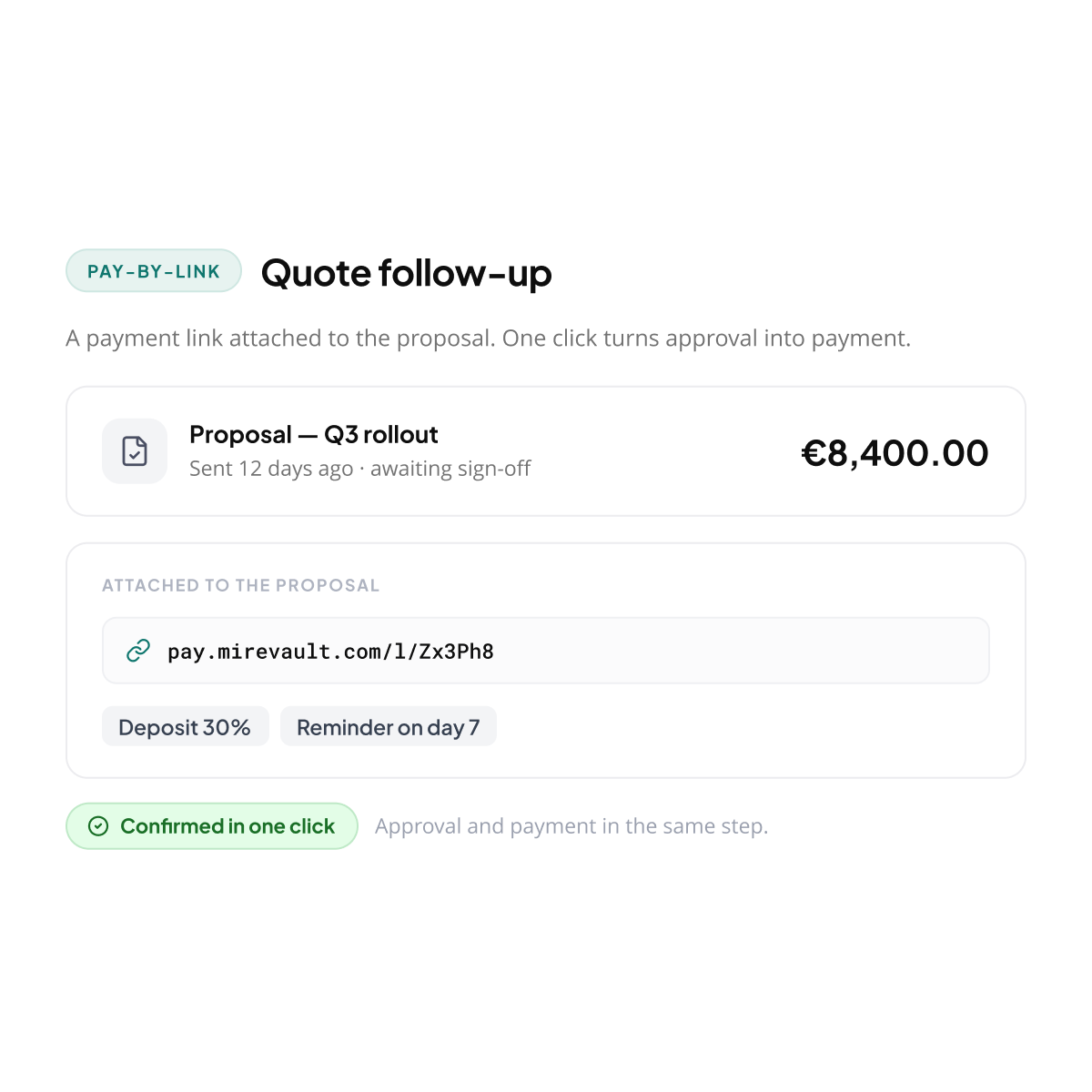
Not every payment starts from a cart. A merchant sends a quote. A customer asks to pay remotely. A store needs a backup for card terminal downtime. Pay-by-Link generates a checkout URL, from the Console or via API, that a merchant can share by any channel. The customer clicks, pays, and the transaction flows through the same infrastructure as any other NORBr order.
Invoice payment
Send a link with a pre-set amount. Customer pays from email.
Remote sale
 Generate a link during a phone call. No terminal required.
In-store backup
QR code at the counter when the terminal is down.
Quote follow-up
Attach a payment link to a proposal. One click to confirm.

What your merchants' customers see is 
what your merchants chose.

You give them the tools. They build the experience. NORBr runs it.

Book a demo