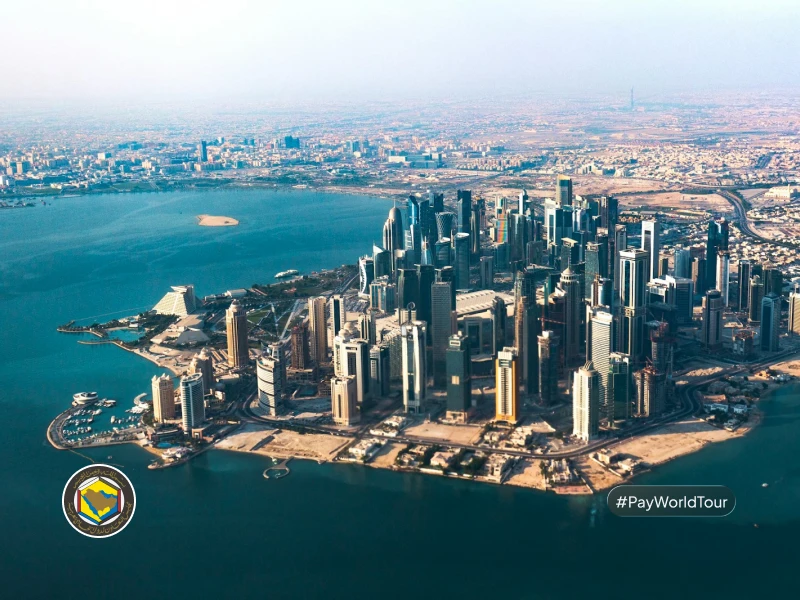
Embark on a journey through the diverse landscape of "Payment methods in Gulf Cooperation Council (GCC)" in this enlightening article. Explore the dynamic changes as GCC nations embrace digital payments, transforming the e-commerce sphere. This piece dives deep into the nuances of the payment ecosystem in GCC, highlighting the significant shifts towards digital avenues. Uncover the local and global actors influencing "Payment methods in Gulf Cooperation Council (GCC)", and how their contributions shape the region's e-commerce trajectory. Join us in unearthing the digital payment nuggets that propel the GCC into a new era of financial innovation.
Payment by card in GCC
In 2023, the GCC's e-commerce sector witnesses a notable shift towards digital payments, especially card-based transactions1. This evolution arises from the convenience and security card payments offer. Mada, a local payment scheme in Saudi Arabia, plays a pivotal role, especially in online transactions2. With over 30 million cards in circulation, it handles nearly 70% of online transactions since its e-commerce enablement in mid-2018.In Kuwait, the KNET system dominates, accounting for over 85% of all transactions2. This popularity highlights the trust and preference local consumers place in homegrown payment systems. Similarly, Bahrain's Benefit scheme routes 60% of all transactions2. In Qatar, the NAPS (Qpay) network, managed by the Qatar Central Bank, handles over 70% of all online transactions2. Moreover, OmanNet in Oman caters to about 70% of online transactions, signifying a substantial local preference for domestic payment systems2. Furthermore, the Central Bank of the UAE unveils new retail payment services and card schemes, heralding a new digital payment era3.Overall, the rapid adoption of local card schemes in e-commerce transactions across the GCC underscores a significant digital transformation. This transformation not only boosts e-commerce growth but also aligns with government initiatives to foster digital economy ecosystems. Consequently, local and international retailers operating in the GCC must adapt to these evolving payment preferences to remain competitive and ensure consumer satisfaction.
Payment by cash
In 2023, the GCC witnesses a digital transformation, propelling e-commerce to new heights. Cash payments, once common, now wane. The trend veers towards digital, with a McKinsey survey revealing 58% of Middle East consumers favoring digital payment methods over the traditional cash, which only garners a 10% preference1.Government initiatives further augment this shift. They unveil new regulations, preparing the UAE for a digital payment era, fostering a secure e-commerce environment67. These regulations lay groundwork for modernized payment systems, diminishing the role of cash in e-commerce.
Payment by bank transfer
In 2023, the Gulf Cooperation Council (GCC) experiences a notable surge in e-commerce, driven by a shift towards digital payments. Instant payment or bank transfer emerges as a preferred method, catalyzing e-commerce growth. The UAE, leading the charge, launches its Instant Payment Platform (IPP) in early 2023, promoting real-time transactions around the clock12.Instant payments, known for their speed, security, and cost-effectiveness, reshape the digital retail landscape significantly3. Saudi Arabia follows suit, with a 28% increase in real-time payment solutions usage between April and May 2023, supported mainly by the SARIE system3.Local actors play pivotal roles. Saudi Payments, a notable entity, consolidates MADA, SADAD, SARIE, and ESAI, streamlining payment processes in Saudi Arabia4. SADAD facilitates real-time online payments, partnering with local banks and billers, providing a reliable and secure platform for transactions5.Startups also join the fray. Lean, Dapi, and Tarabut Gateway, emerging paytech startups, offer innovative solutions, enhancing the payment experience in the GCC6. Additionally, AFAQ, provided by the Gulf Payments Company, extends its services across the GCC, executing financial transactions in local currencies in real-time, ensuring low fees within a secure ecosystem7.Moreover, other local actors like Fawri, Naqodi, and eFawateercom diversify the market, providing additional avenues for instant payments8. The collective efforts of these actors contribute to a robust instant payment infrastructure, promoting e-commerce growth.The Middle East anticipates a significant uptick in real-time payment transactions, with projections showing a 30.6% CAGR from 2022 to 2027, underscoring the region’s move towards digital payment solutions9. The rapid adoption of QR codes further amplifies this trend, with companies like Kem employing this technology for customer-to-customer transfers10.
Payment by installment and BNPL
In 2023, the Buy Now, Pay Later (BNPL) is witnessing a significant uptick in Saudi Arabia, with BNPL payments expected to grow by 21.7% annually, reaching US$1.4 billion1. This growth isn't isolated; it reflects a broader acceptance across the GCC.Moreover, the future shines bright for BNPL businesses as e-commerce is slated to become a nearly $50 billion market by 2025 in the GCC2. Consequently, local and regional BNPL platforms are intensifying their market presence. For instance, Tabby, a notable player, is establishing its foothold alongside others like Tamara, Spotii, Cashew, and Postpay in the UAE3. These platforms are not only fostering competition but also driving innovation in the BNPL domain.Additionally, Emirati providers like PostPay and Cashew are competing with Saudi Arabia's Tamara, demonstrating a regional expansion of BNPL services6. Spotii, another key player, recently got acquired by an Australian company for $16.3 million, underlining its market significance7.Lastly, the aggressive expansion of Tamara, bolstered by a hefty $150 million debt financing, is poised to further elevate the BNPL landscape in the GCC region10.
Payment by digital wallet and X-Pay
In 2023, digital wallets (e-wallets) are gaining traction in the GCC's e-commerce sector. They offer a seamless, secure payment experience, fostering a cashless economy12. Local actors like PayBy, noqodi, and Careem Pay are at the forefront, promoting contactless payments123.Moreover, Klip and payit, UAE-based platforms, are driving the transition towards digital payments, simplifying transactions for users45. They're striving for financial inclusivity, catering to the unbanked population.Furthermore, global players like Apple Pay and Google Pay are competing in this market, enhancing the competitive landscape6. This global-local competition spurs innovation, benefiting consumers with improved services.Additionally, STCpay from Saudi Arabia is demonstrating the potential of telecom-led digital wallets, broadening the spectrum of financial services7. They exhibited their innovative solutions at the LEAP 2023 Conference in Riyadh, reflecting the region's dynamic digital payment ecosystem.CashU, a secure global e-wallet, and KFHpay, a digital wallet service by Kuwait Finance House, are also making strides, offering a range of digital payment solutions, highlighting the diversity in the GCC's digital wallet scene8910.Lastly, the entry of new players and collaborations between local financial institutions and global fintech firms are further propelling the digital wallet adoption in e-commerce, making the GCC a burgeoning market for digital financial services111213.